
escape 2026

First a note of thanks to my diamond medallion members: I know this is the time of year to trim expenses and cancel paid subscriptions so I appreciate you sticking with me through the end of December! I took a vacation for the first time in 2025 (I really needed it) and now I’m back.

Escape 2026
Literary agents want to represent projects they can sell to editors and editors want to acquire books they can sell to readers. What do readers want?
They want—according to every single guest I hosted in my Chat Room—to “escape.”
But what qualifies as an escapist read? Romance? Fantasy? Sci-fi? Can you only escape reality through genre fiction? Does escape require a happily ever after?
Over the holidays, when I had hours to read for pleasure instead of under personal or professional obligation, I read The Diana Chronicles by Tina Brown, published in 2007. It’s the 500-page story of the tragic death of a real-life princess, “the first great glamour icon to live and die in the age of round-the-world, round-the-clock multimedia,” exhaustively researched and expertly structured, told in Tina Brown’s singular style:
“The Dress” was the fulfillment of her Princess fantasy. She was insistent in her demand for its puffy sleeves and floating silk, its twenty-five-foot taffeta train, its nipped waist, and its unique lace embroidered with pearls and sequins. She would be a fairy bride for her father and her Prince. Those creamy ruffles and ivory frills would float her away from the agonies of the present to a future of certain love. By the 1990s, when she was a svelte power woman and girls were marrying in body-hugging tubes, the voluminous crinoline she had worn on July 29, 1981 embarrassed her. It hangs now its glass case in Althorp like an artifact from Miss Havisham’s attic, Exhibit A in the museum of a dead dream.
Exhibit A in the museum of a dead dream!
Even though the story of Princess Diana is a tragedy, this #1 New York Times bestseller touches every universal pleasure button: sex, money, power, competition (CAMILLA), beauty, and danger.
The Diana Chronicles offered me an escape from:
America
The 2020s
The internet
Frontlist marketing and publicity (no one pitched me this book; no publicist is following up to ask me how I will cover this book)
As I look ahead to 2026, I’m using “escape” as lens to predict what projects agents will be signing, what books editors will be acquiring, what books we’ll see on the bestseller lists, and which books we’ll see bookish content creators—who are inundated with pitches, now that there are hardly any book reviews published in legacy media—reading and promoting.
Escape is undoubtedly subjective—The Diana Chronicles might not be your idea of an “escapist” holiday read. Maybe you were drinking hot cocoa by the fire with Louise Penny.
But I think we all know the difference between a book that feels like an obligation and one that feels like a decadent indulgence.
I tried to put myself in a reader’s shoes and ask myself, what are they escaping from? And then, what kind of books offer the escape they’re seeking? If you’re a writer who’s pitching a book in 2026, it might be a helpful exercise to think how your book offers a welcome escape hatch to someone who is feeling stressed, overstimulated, anxious, fearful, angry, uncertain, and/or bored.
Escape from 2026
The historical fiction market is evolving. The next time you’re in Barnes and Noble, count how many historical novels you can find. The golden era of World War II novels with covers depicting women walking away with planes overhead is over. Some historical fiction is now packaged as upmarket (see Lessons in Chemistry and Daisy Jones & the Six), to crossover between younger and older audiences.
When I think of historical fiction, I am always thinking of the age of the reader, and whether she’s reading to understand the era that shaped her mother, or whether she’s reading for nostalgia. A baby boomer in 2015 picked up a World War II novel to read about a time when her parents were young adults. The younger boomers and the older Gen Xers are reading Lessons in Chemistry and Kristin Hannah’s The Women.
Aging millennials have Atmosphere (set in the 1980s, when our moms were our age!) and they are also experiencing the onset of nostalgia: see Deep Cuts, which opens in 2000. I know it’s painful to think of the 2000s as “historical” because you’re still twenty-seven in your heart, but as millennials proceed through their forties, we’re going to see more nostalgia for the 2000s and 2010s. For the young gen Xers, it’s the ‘90s: I was recently sent a galley of Dear Monica Lewinsky, set in 1998.
Escape from atheism and nihilism
Eighteen million Bibles were sold in 2025, up 11% from the previous year. I wrote in 2021 for the New York Times about Glennon Doyle as an Instavangelist for the millennials and Gen Xers who made left-wing politics their religious faith, asking whether influencer-activists can help us reckon with the profound questions of how best to live our lives that religious texts and clergy have helped us with for centuries, so I’m not surprised at all that many Americans are becoming more religious (or religion-curious). In April, Andrews McMeel launched Amen Editions, a new Christian imprint publishing "faith-based inspirational, self-care, gift, and activity books.” PRH launched a new Christian imprint in October.
I’ve heard authors like Anne Lamott and Kate Bowler described as “Christianity lite” and I think we’ll see more books that incorporate faith without being dogmatic or prescriptive. We want to read stories of people who believe in something. Theo of Golden is the perfect fiction example of this. One Amazon review says, “The book contains many of the things I love including books and bookstores, art, music, small towns, gardens, walking, coffee shops, street musicians, churches, good food, friends, angels, and the power of faith, grace, and love.” According to Devon Halliday, the self-published novel sold to Atria for three million dollars.
Escape from injustice
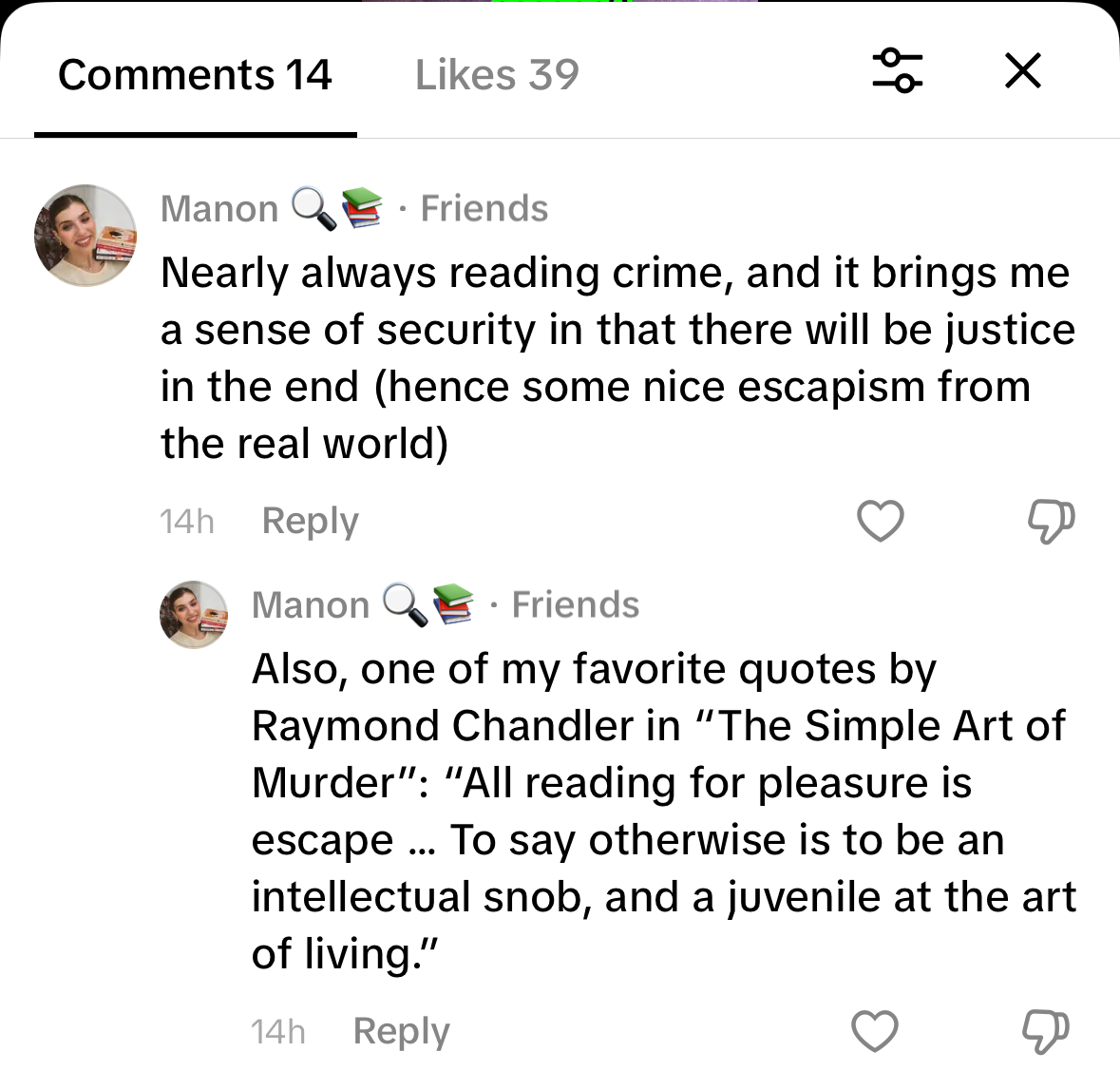
I asked on TikTok what readers turn to when they want to escape and friend of the Substack Manon Wogahn told me why she reads crime fiction. (Find her mystery newsletter here and her TikTok here.)
One of my favorite books of 2025 was The Mother Next Door, a true crime book by Andrea Dunlop about Munchausen by Proxy, a form of medical child abuse. I know that doesn’t sound “escapist” at all but this book made me cry because of the tireless work of the book’s co-author, detective Mike Weber, who has dedicated his career to investigating these crimes and protecting these children. His tenacity and courage, while investigating extremely disturbing cases, is heroic.
I seem to be on a kick of bad mom books—I also loved Shari Franke’s memoir The House of My Mother, which ends with justice served.
Escape from the internet
This is a hard one for me to accept, as someone who writes internet novels! My breakout novel Self Care is set at a wellness startup that’s a cross between GOOP and Instagram. Five years after Self Care, I published a gothic mystery set in a TikTok hype house, but I’ve found it harder to persuade readers they should sign off TikTok in order to read a novel about… TikTok. And the readers who aren’t already on TikTok have little interest. I’ve had more success highlighting the gothic element of the novel in my content.
I think it will be harder than ever to sell extremely online novels in 2026. I’m trying to keep hope alive by recommending the internet books I love: You Have a New Memory by Aiden Arata was one of my favorites of 2025. I recommended it here and here.
Escape from America
On the literary side of BookTok where I live, translated fiction continues to be popular, especially novels from Asia. There were several translated books on the Times’s 100 Notable Books of 2025.
Myopic, a used bookstore in Chicago, has one bookshelf of new fiction: it is almost entirely novels in translation. After browsing used books, upstairs and downstairs, for an hour, I left with two books, both new: Clarice Lispector’s Agua Viva and I Who Have Never Known Men, a Belgian novel from 1995 that went viral on BookTok.
Escape from Big Five publicity and marketing
This is another hard one for me to acknowledge and accept, but I feel it at a gut level. Book publicists and marketers are working tirelessly to get frontlist titles in front of content creators, but those content creators are overwhelmed with pitches. How many pitches? My Chat Room guest Celine said she read 165 books in 2025. I’m receiving more book pitches from publicists than ever (I’ve started tracking them: I got six between December 1st and 9th)—more evidence that publicists are going wide because they know they can’t expect the same level of traditional coverage they would have gotten ten years ago.
To escape the hype machine, creators like Malissa are reading and sharing classics, work in translation, and small press titles (NYRB books are very popular).
This leaves us with a paradox: how on earth are you supposed to promote a book if there are no book reviews anymore, daytime TV doesn’t move books, and the book influencers who can make a book go viral are tired of being pitched?
I think reading retreats like this one provide one answer: show content creators you understand they need time to relax and reset. Give them a place to do to that, and good company to discuss a new book with.
Anything you want to escape that I missed? Anything you think I got wrong? Let me know in the comments!
Upcoming Events
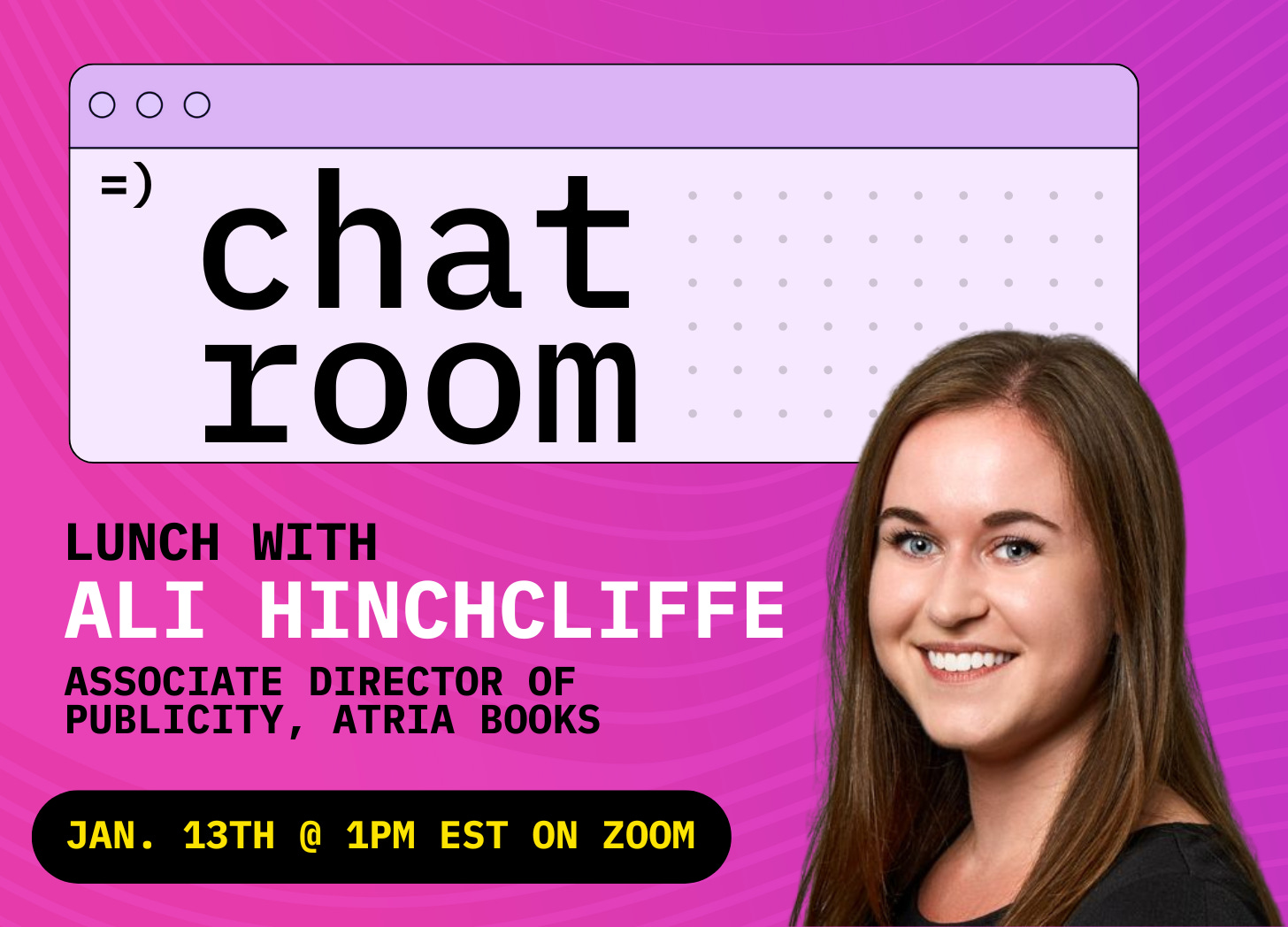
Our first Chat Room of the year will be with Alison Hinchcliffe, associate director of publicity at Atria. Ali has worked on campaigns for both fiction and nonfiction titles, including Finding My Way by Malala Yousafzai, Don’t Let Him In by Lisa Jewell, and Theo of Golden by Allen Levi. I’ll interview Ali for 30 minutes and then open it up to your questions about publicity in 2026.
I definitely relate to this! I've been rereading Marian Keyes novels I've already read several times - she's an Irish writer who's been dismissed as "chick lit" but is SO smart and funny and deep. And the novels are set outside the U.S., and some of them outside the smart-phone era, so not recalling some of the worst aspects of reality right now. TLDR, glad you're back at it, Leigh, and hope the vacation was good!
I think this question of what we mean when we say 'escapist' fiction is so interesting! ESPECIALLY since, like you said, that term was all over the place in publishing in 2025. I've actually reached the conclusion that any book, no matter the topic, has the capacity to be 'escapist,' that it's more about how the story pulls you into its folds, takes away the awareness of time, and that to me is more about how the story/world/characters are rendered, opposed to it being a 'light' or 'easy' topic as you said. I agree with Anna Sproul-Latimer's prediction that readers in 2026 are actually seeking more depth/meaning/challenge in their books (you get at this re: religion!). Sometimes I'll read an enjoyable, easy to read book but walk away empty-handed and that leaves me feeling so mixed up. Escapism is so relative too! Like I'm struggling to read light, fun romances right now because they're often so far from my actual dating life that instead of spiriting me away from my bleak reality, they remind me of it. But I love your predictions! (even if some of them aren't great for me and book loll)