
haunted by history
a new Gothic mystery inspired by an unsolved arson in Dorset


In March, I received a blurb request that was written in my love language:
Dear Leigh,
Some time last year, I heard you say on a podcast that you loved stories of dark romance and people who are driven to do deranged things by their obsession, and I made a note that the things you loved sounded very like my debut novel, Dovecombe.
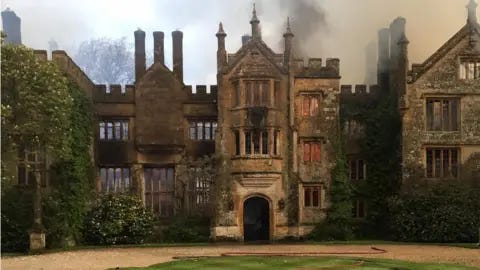
The author, Alex Clark, a former stonemason and archaeologist, had written a Gothic mystery loosely inspired by the unsolved arson that gutted the centuries-old Parnham House in Dorset. Instead of ending with a fire, this Gothic novel begins with one.
I read and loved Dovecombe—it has everything I want from a Gothic novel: a mystery, a dreadful atmosphere, obsessive yearning, the creepy imprint left by coercive control, women behaving badly, somnambulism, and an amazing house.
Dovecombe will be released on January 5, 2027, by Norton, and I’m delighted that Norton said yes to my idea to reveal the cover in Attention Economy—along with an interview with Alex about architectural history, the unsolved arson at Parnham House, and the ways in which she subverts gender (and genre) expectations in Dovecombe!
After studying archaeology and medieval architecture at university, Alex worked as an historic buildings archaeologist, drawing and researching industrial buildings in Sheffield and in London. She retrained as an heritage stonemason in 2010 and worked for four years at Gloucester Cathedral, where she learned traditional stone-cutting and conservation skills.
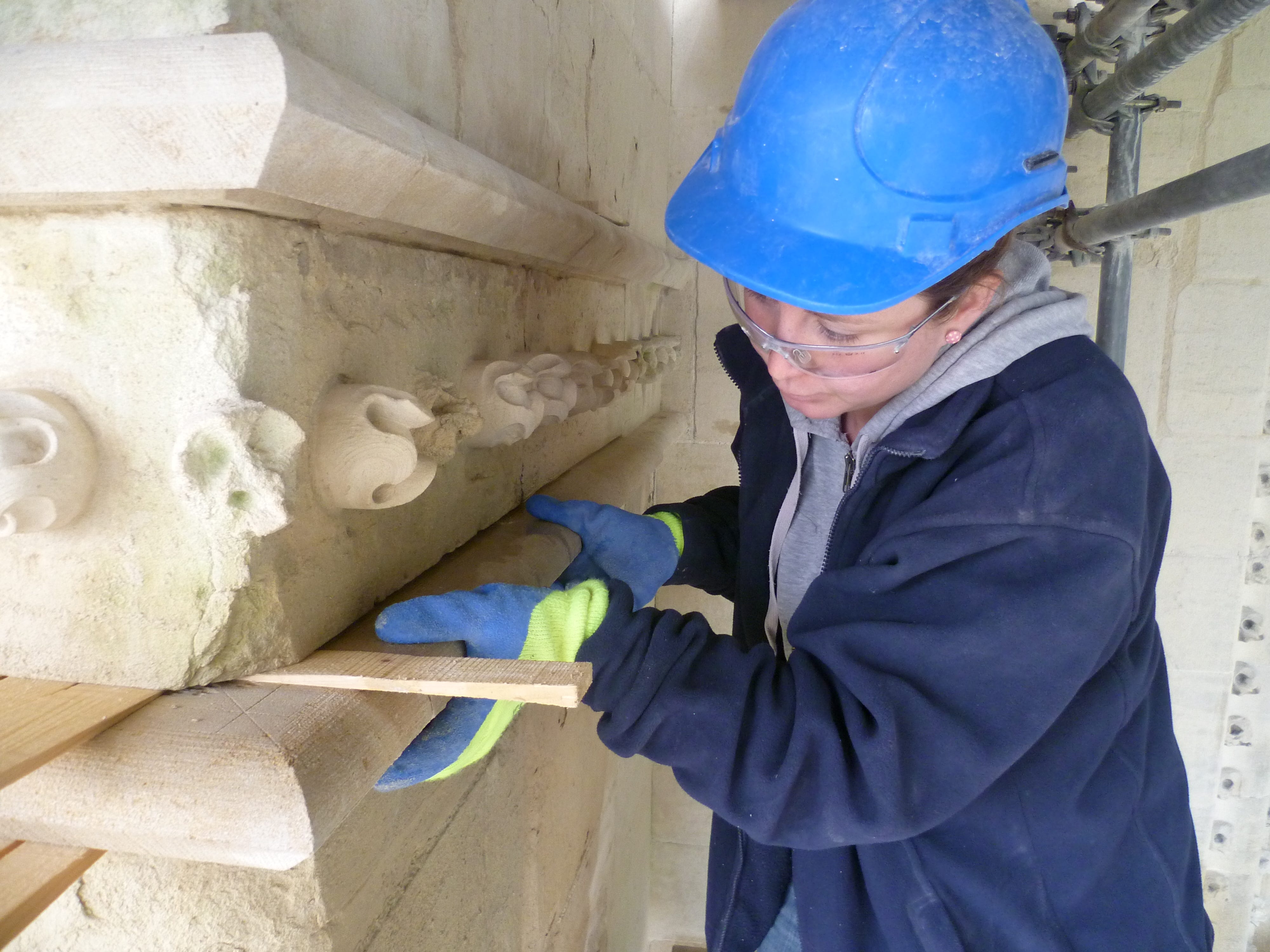
Your main character Dorrie is a stonemason, which makes her incredibly useful to the matriarch of Dovecombe Manor, who is trying to restore the family property to its former grandeur after a devastating fire. How did your own experience working as a stonemason inspire the novel?
What I love about architectural history, and about history and archaeology in general, is that the past still exists in the present. In the village where I live, the fields behind my house are striped with long hummocks formed by medieval strip-farming. I go running across them, adjusting my gait for the rise and fall, and I know that under my feet is a landscape formed by the labour of people who lived five hundred years ago, who mounded the earth to manage soil depth and drainage. In the summer, when the wild plants are tall and flowering, I can see that even today the species that grow on the high ground are different to those which grow in the low. It’s the same with old buildings. When you know how to cut stone by hand, the marks it makes, you can look at ashlar on a medieval church and read from the toolmarks on the surface that the person who cut it used an axe, and they shifted position halfway across the surface. When I was a buildings archaeologist, I remember climbing a staircase in a Victorian factory where each stone tread was dished in a particular spot, and watching my own feet automatically hit the same spots.
What is all of this if not a haunting? The people who laboured and cut and climbed are gone, but the landscape and the buildings they have left behind are still here, still speaking, still conforming us to long-dead patterns. And there are works that we leave behind that will last long into an unimaginable future. As a mason, I cut pieces of stone that will sit in the fabric of Gloucester Cathedral for perhaps the next two, three, four hundred years. I’ll be soil, and no one will remember me, but the marks my hands made will still be there. I’m dizzied by that. It gives me a kind of vertigo to think of it.
That perspective is one that leads you towards the Gothic. I have a Gothic mindset, I think: I don’t trust shiny classical ideas about human rationality and control. We are deeply weird creatures, and we know so little. I am a tiny speck in an incomprehensibly vast picture which I have as much hope of understanding as a medieval peasant. Lean in to the mystery, I say.
What was the first Gothic novel you ever fell in love with?
I’ve always been drawn to Gothic stories. I remember my mum being exasperated at me for reading the Ladybird Horror Classics in my primary school’s library when I knew they gave me nightmares. They were just irresistible. From there I went to The Canterville Ghost, The Hound of the Baskervilles and the Sherlock Holmes stories, and eventually to MR James and the Victorian classics. I devoured anything creepy, but I don’t think you could say I fell in love with a Gothic novel until I got to Sarah Waters’ The Little Stranger.
For a while, at the very start of my writing career, I wasn’t sure how to reconcile being a ‘literary’ writer with wanting to write about ghosts. Literary writers, I thought, wrote about things like divorce and the state of the nation, whereas my short stories constantly veered into the weird. I was pretty sure this wasn’t allowed. Then I read The Little Stranger, and found a beautiful literary ghost story in which the haunting is inextricably linked to the characters’ own grief, fears, and destructive desires.
I’m not exaggerating when I say I still think of its ending, and the hinted mechanics of its haunting, regularly. The idea of a part of a self, all the repressed desire and jealousy and anger, splintering off and walking the world: incredible. Hundreds Hall, too, is realised in such rich detail that it is practically a character in its own right. I feel like I have been there and dug acorns from its mouldings myself. It’s one of those books I constantly recommend to people, and my own faded copy lives on the shelf of books that never get cleared out, between The Turn of the Screw and Peter Ackroyd’s The English Ghost. It was a decade after reading The Little Stranger that I wrote Dovecombe, but you don’t have to look to deeply to see its influence. It showed me what modern literary Gothic could do, and it helped to set me free as a writer.
I love how you’ve taken classic Gothic tropes and playfully subverted them—when the main character arrives at the Gothic manor, it has already burned in a fire. The chilly coercive control and gaslighting that the reader would expect from a Max de Winter type comes instead from the narrator’s abusive wife (from whom she escapes, early in the novel). Can you talk about the ways in which you wanted to stay faithful to the genre you were working in, while also disrupting some reader expectations?
One of the major themes of the Gothic is the breakthrough of the dark, primal and powerful into the orderly daylight world. Often that dark intrusion is something from the past: something the characters have tried to bury, but which won’t stay in its grave. Its return shatters the characters’ illusions of control, the just-so story they’ve told themselves about their identity, their history, and their destiny, and makes them face the fact that they’re driven by forces they don’t understand and can’t master. This makes the Gothic an excellent genre in which to explore the long tail of psychological damage.
Traditionally, in the ‘female Gothic’ (as in Rebecca), there’ll be a vulnerable young woman trapped by an attractive but sinister man in the Gothic house. She’ll discover the terrible truth about him, his past, and the house, and we’ll hold our breath as she tries desperately to escape its grip. I love this format, but as a writer who is perennially, incurably obsessed with the deep psychological drivers behind people’s actions, my mind wanders to the wider picture: what happened before, and what happens after? What caused Rebecca to behave like that? What was Mrs Danvers’ childhood like? If the unnamed heroine of Rebecca has kids with Max, what are they going to carry with them?
Recurrence of darkness is built into the Gothic. Rebecca opens post-disaster with the couple in the South of France, but it’s clear there is no peace between them. They are still haunted. You could take the frame of the novel and move it decades before or after the events at Manderley and still find a terrible Gothic tale. So I think that although Dovecombe does move the frame slightly, does play with the traditional format, it’s very faithful to the heart of its genre: it’s about the way that the unresolved past intrudes into the present, warping and poisoning it. There’s a supernatural curse in the book, but arguably the real curse, the bigger sinister threat, is the burden of unhealed damage that’s passed down through the bloodline of every character. There’s no one in the book that isn’t haunted by their history, or driven by an unholy appetite. And that is the Gothic.
Dovecombe does also mess around a bit with Gothic gender norms. While there are a couple of sinister men in play, women are the main Gothic threat as well as the Gothic victims. I wanted to portray the kind of coercive control and manipulation that can be exerted by women over other women, whether that’s within families, friendships, or romantic relationships. Dovecombe’s Gothic is very female, but none of its women are innocent heroines, not even its protagonist Dorrie. She’s vulnerable, and she’s also dangerous; capable of great and terrible things. I loved writing her.
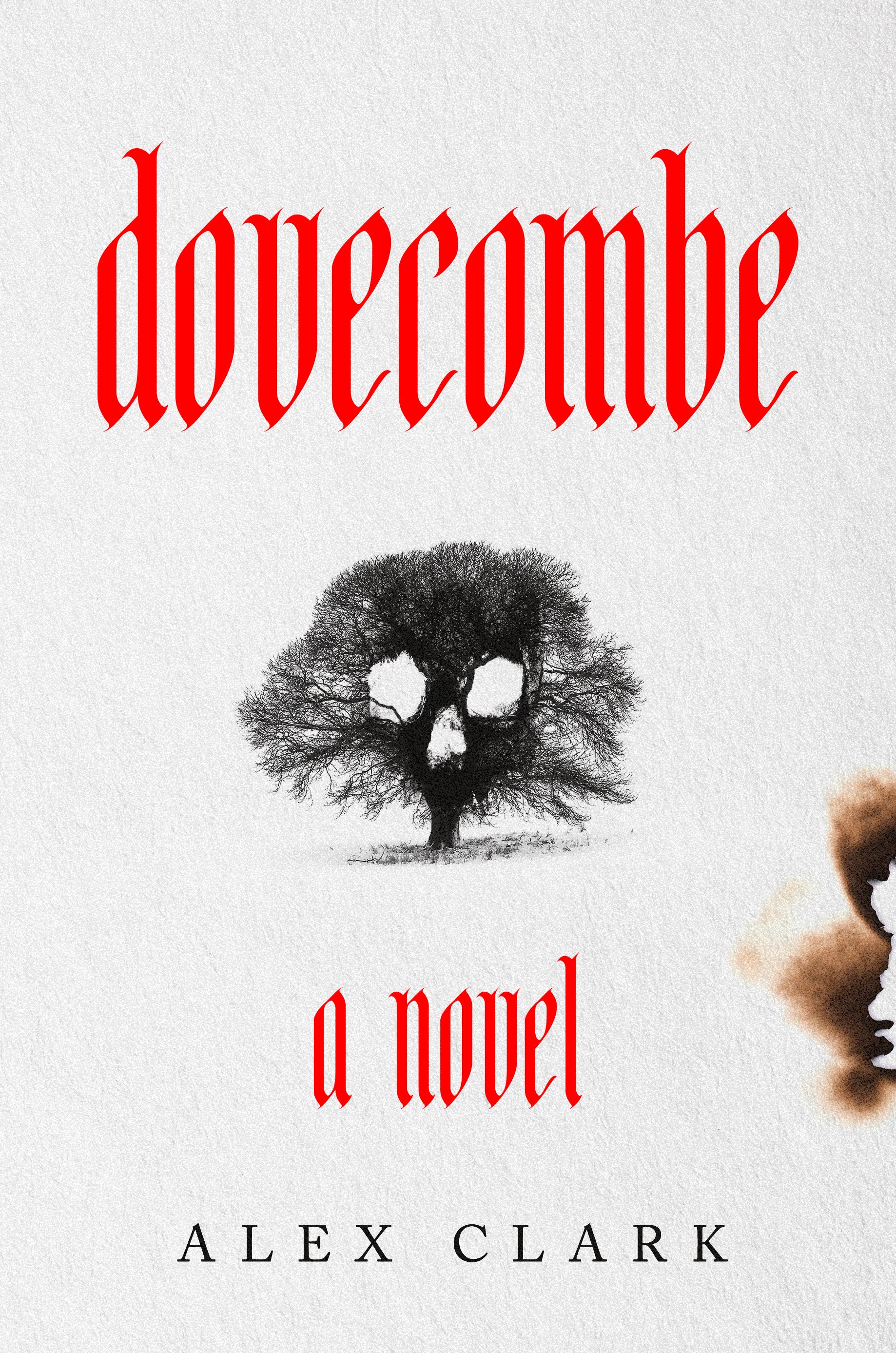
If you’re struck by this gorgeous cover, leave a comment!
Every Gothic novel needs a great house. Can you tell us about the history of the real Parnham House and what most excited you about it as a setting for Dovecombe?
The story of the fire at Parnham House is incredible. In short, Parnham House is a sixteenth-century manor house in Dorset, UK, which was bought by an Austrian millionaire named Michael Treichl in 2001. He refurbished it in incredibly lavish style to the tune of $14 million, which among many other things bought a private cinema, a theatre, a full staff, a string of polo ponies, and an interior by the designer who fitted out Clarence House for Prince (now King) Charles. Treichl and his wife, a former model, hosted lavish shooting parties for European aristocrats and came and went from the house by helicopter.
On April 17, 2017, when no one was in residence at the house, it caught fire and burned out in a spectacular blaze that lasted for five days. There were rumours of suspicious circumstances: people said that the polo ponies had been let out of their stable before the fire, possibly to save them from it. Fire investigators struggled to find a cause and origin point because of the blaze’s ferocity and the total destruction of the interiors. A few days later, Treichl was arrested and then released, and then, in mid-June, his body was found in a Swiss lake.
Treichl’s wife put in an insurance claim for £38 million, and the house’s insurers called in a firm called Burgoynes, forensic investigators specialising in arson, to try and find out whether the fire had been foul play or not. According to newspaper reports, in 2019—two years after she began the claim—she admitted that her husband had confessed to her shortly after the fire that he was the arsonist. The insurers rejected the claim, and she took them to the High Court to dispute it. It wasn’t paid.
In 2020 the entire estate, with the burned-out shell of the house, was bought by a former ’90s rave promoter for £2.5 million. Much to the horror of local residents, he applied for an events licence allowing 24-hour alcohol sale and announced that he proposed to turn the shell into a ‘Batman house’ with secret doors, for people to visit on adventure weekends. I actually went down to Dorset and tried to get a look at the house around this time. I had a friend who had introduced me to the whole story and also knew where the house was, and how to get close to it on a public footpath. We crept through the trees to get a glimpse of its skeletal blackened rafters. It was thrilling.
There were so many things that grabbed me about this story when I heard it. Firstly, the fire was absolutely spectacular. The pictures are both terrible and incredible: a giant inferno consuming a beautiful, five-hundred-year-old house and all its lavish contents. Secondly, it’s still a mystery. Although there are glimpses of the truth, no one know fully why or how the fire happened. Thirdly, there are all those machinations: the fire investigators, the forensic specialists, the insurance claim, the rumours. Who knows what? Who is telling the truth?
I felt compelled to write a book that used some of those elements. Dovecombe isn’t based on the story of Parnham House or its owners, but it picks up some of its components: a beautiful sixteenth-century manor house in the West Country, a spectacular blaze, an arson investigation that becomes a cold case, a family in limbo over unpaid insurance, and a tangled mystery about who started the fire, how, and why. Dovecombe does reveal the solution to its arson in the end—though I won’t say what it is!
Can you tell us about the biggest challenge you had in writing this novel, and what you did to solve it? (Without spoiling the plot, of course!)
Honestly, there were so many! If I had to choose one, I’d say I learned a lot about writing dialogue. I wrote short stories for a long time before novels, and in my short stories the dialogue was pretty sparse. When I came to novels (I wrote two before I wrote Dovecombe), I at first tended to write dialogue as realistic conversation and/or information exchange. I learned through critique and through being edited that a scene of dialogue must be as sharp, as pared-back, as essential, as a scene of action. It should involve force. Each character is trying to achieve something in the exchange. Maybe they’re trying to hide their feelings, to protect someone, to signal status, to extract information, to flirt, to seem unaffected, to impress. Now when I write dialogue I read it back and check that I know what everyone in the conversation wants and what they’re driving at, and I check it rises to a climax, just like an action scene.
"From the very first page, I was utterly transfixed by the eerie atmosphere of Dovecombe, a marvelous Gothic mystery, brimming with family secrets, cursed property, class tension, and the dangers of illicit desire. Fans of Sarah Waters and Carmen Maria Machado will love this suspenseful debut with psychological depth."
— Leigh Stein
Dovecombe is available for preorder now from Amazon, Barnes & Noble, and Bookshop.org!
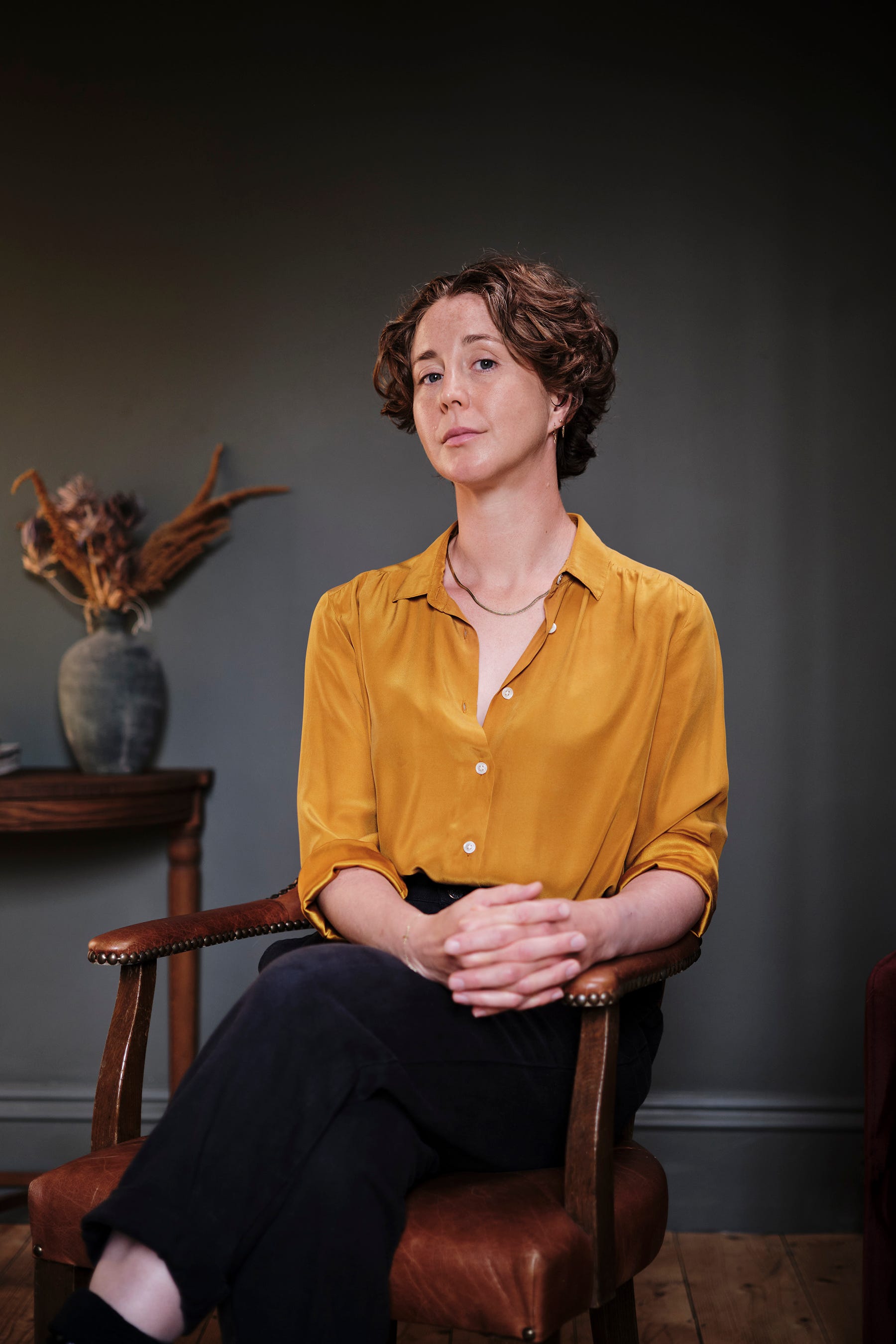
Follow Alex Clark on Instagram.
Upcoming Events

On Tuesday, August 25 at 1pm ET, I’ll be hosting a Chat Room event with Nneoma Amadi-obi, who acquired Dovecombe for Norton. My Chat Room conversations with book publishing professionals are available to paying subscribers of Attention Economy. I’ll interview Nneoma for thirty minutes, and then open it up to audience questions.
On Wednesday, August 19 at 1pm ET, I’ll be hosting a Substack Live conversation with BookTok creator and debut novelist Stacey Yu, about publishing Kitten with Random House! This is a public event, open to everyone. Click here to save the date!
On Wednesday, September 2 at 1pm ET, I’ll be hosting another Chat Room with editor Batya Rosenblum, who acquires personal development, parenting books, and non-fiction about religion and spirituality, for Tarcher, an imprint of PRH.
On Thursday, September 24 at 1pm ET, I’ll be hosting a Chat Room conversation with Stefanie Lieberman, a senior literary agent at Janklow & Nesbit.
Hype House Update 🏰
I turned my Substack post on my book sales into an Instagram carousel that’s been viewed almost 60,000 times and now 70% of the spots in my upcoming Hype House are taken. In Hype House, you’ll learn how to repurpose your Substack posts into Instagram content that actually gets engagement and grows your audience. (Hype House alum Mikala Jamison is a great example.)
Register here before it sells out!
Love the cover and the premise!
Salivating over this premise, house, and cover.