
pity marketing
will people buy your book if they feel sorry for you?

This week, I went on the Jews on Film podcast to talk about Marty Supreme (which I saw twice in theaters!), what it has in common with Funny Girl, whether it’s “bad for the Jews,” and Philip Roth’s 1963 essay about causing offense. You can listen here and follow Jews on Film on Instagram for more Jewish film content.
Pity marketing
I watch a lot of author content on social media. There is one form of author content that gives me a full-body cringe, because it combines my two greatest fears:
Fear of irrelevance
Fear of being vulnerable in public
And that is the “no one came to my book event” post.
If one of my clients or students messaged me and said “hey, I’m at the bookstore event and no one is here… I feel like absolute garbage… maybe I should create content about it??,” I would take a Lyft to O’Hare, get on the next flight to their city, confiscate their phone, and then buy them dinner and let them vent all their disappointments for two hours (followed by dessert).
Last November, I wrote about commiseration content, which attracts other writers: posting about rejection, posting about how much publishers suck at doing X, posting about how unfair it is that agents do Y, posting about the sting of negative Goodreads reviews. Commiseration content might connect you to other writers. It’s not going to attract readers. And it’s not going to attract a literary agent. (It could actually repel one.)
The “no one came to my book event” post takes commiseration content a step further because it’s posted during the critical window of book launch—the author posts, hoping that her failure will go viral and that strangers will feel so badly for her that they’ll buy the book out of pity.
Where does the inspiration for this content come from?
This entire TikTok account is dedicated to pity marketing: “nobody came to my aunt Barb’s book signing.” There’s a human interest story here: Aunt Barb looks like she’s wearing a Golden Girls costume and she recently lost her husband. She’s an underdog that the people of TikTok can root for. No one wants to see plucky Aunt Barb humiliated—even if her self-published picture book looks like something you would only find in the “Local Author” section of a bookstore.
Before Aunt Barb, there was the viral video that a daughter made for her dad, who spent fourteen years writing a book titled Stone Maidens. I cried watching this!
Some authors see Aunt Barb or Stone Maidens Dad and think, what a great idea! I could do that!
A word of caution: the viral success of the Aunt Barb and Stone Maidens Dad videos are attributable not only to their underdog characteristics but because the videos were created by a loving, younger family member, not by the author him- or herself.
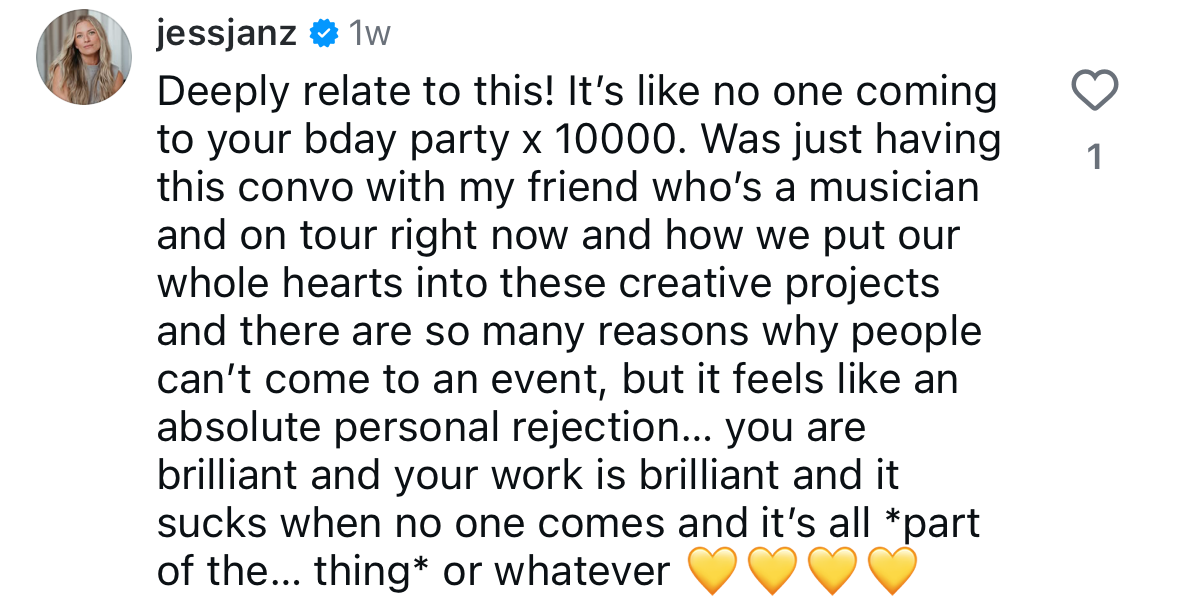
Jen Glantz, a content creator who goes by bridesmaidforhire, self-published a novel titled Finally the Bride and has posted five Instagram posts, seven TikTok videos, and two Substack posts about no one showing up to a Rhode Island event for the book on February 24.
On Instagram, I see a lot of writers commiserating and telling her to hang in there.
Her first TikTok video got 100,000 views (impressive!) and Bethenny Frankel commented, saying she would post about Jen’s book. Jen sent her a copy (and made several more videos about this).
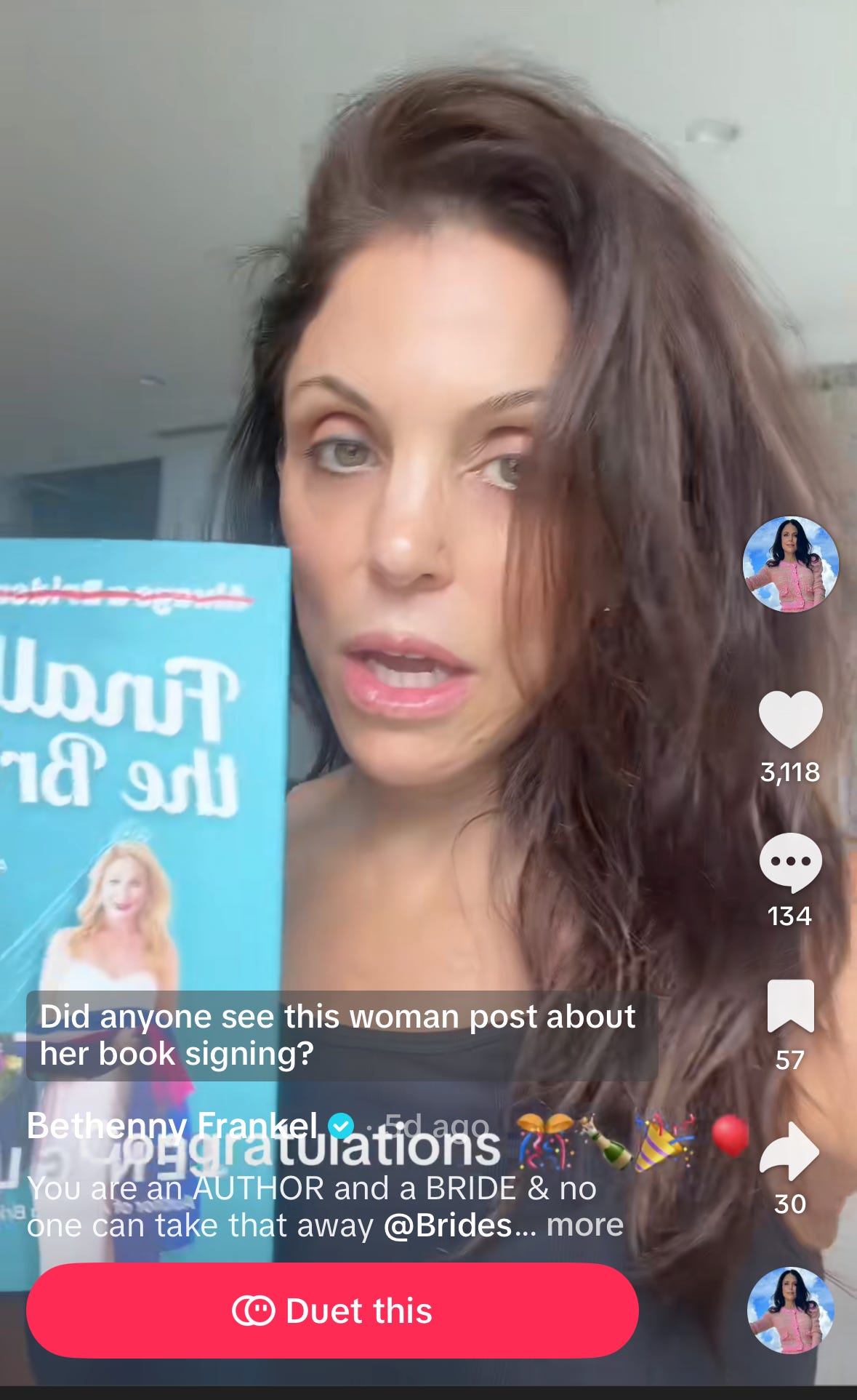
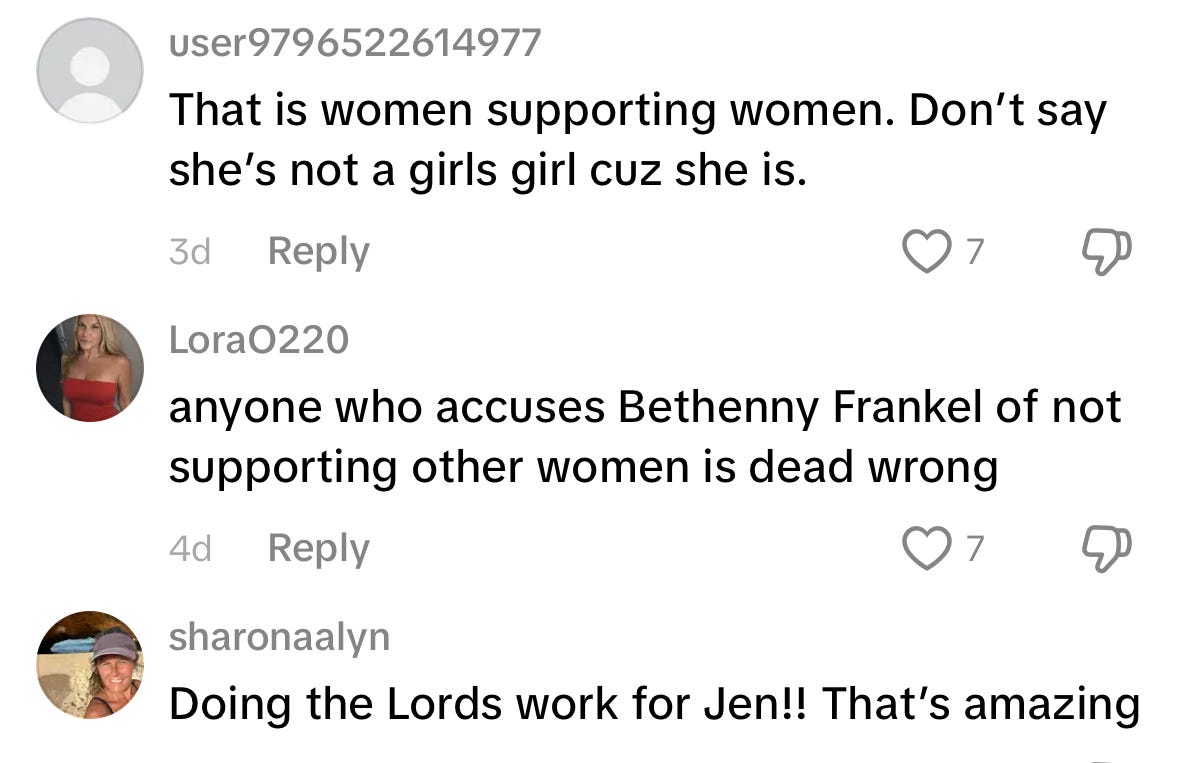
True to her word, Bethenny posted about Jen’s book (exciting!), and the comments are filled with Bethenny fans congratulating her for “doing the Lord’s work” and “supporting women.” It’s a great social media moment for Bethenny to look like a hero, doing a charitable act.
My question is: does any of this content actually sell books?
Jen Glantz is a perfect case study for analyzing the efficacy of this kind of content because she’s a successful content creator. She has what most novelists wish they had: a platform. Her bridesmaidforhire Instagram account has 39,000 followers and her personal account has 15,000. She has 54,000 TikTok followers. She has 90,000 Substack subscribers. If you compare our followings, she has a much larger platform than I do.
I don’t see Jen as an underdog in the same way I view Aunt Barb or Stone Maidens Dad. She’s a successful, attractive millennial. The storytelling around her bookstore event doesn’t move me to tears, even though I can absolutely relate: I understand the challenge of persuading your internet audience to leave their house and show up at an event. I also know the challenge of converting your followers and subscribers into book buyers; it’s something I work on every single day with my clients.
From a consumer—not a writer—point of view, creating content about a lack of interest in your book does not help you prove it’s worth a stranger’s time and money. It’s self-sabotage marketing.
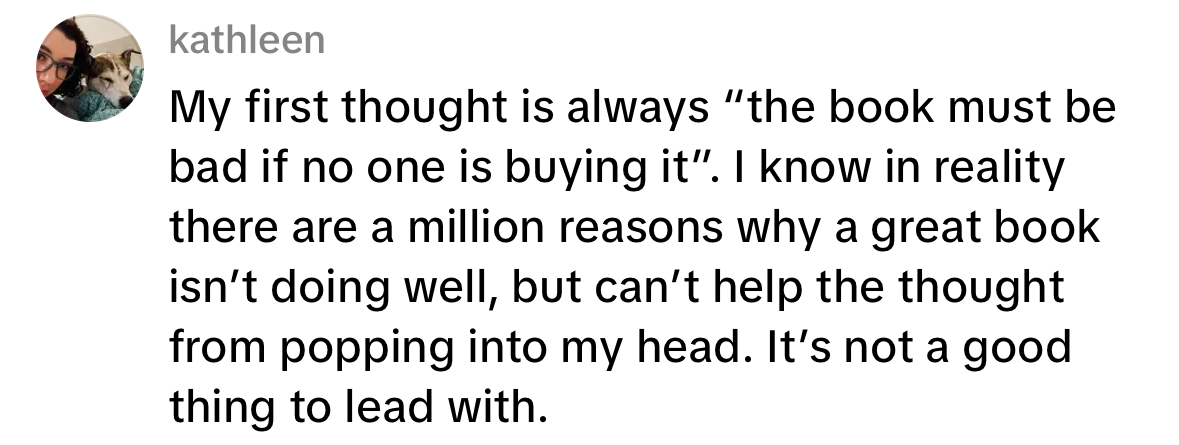
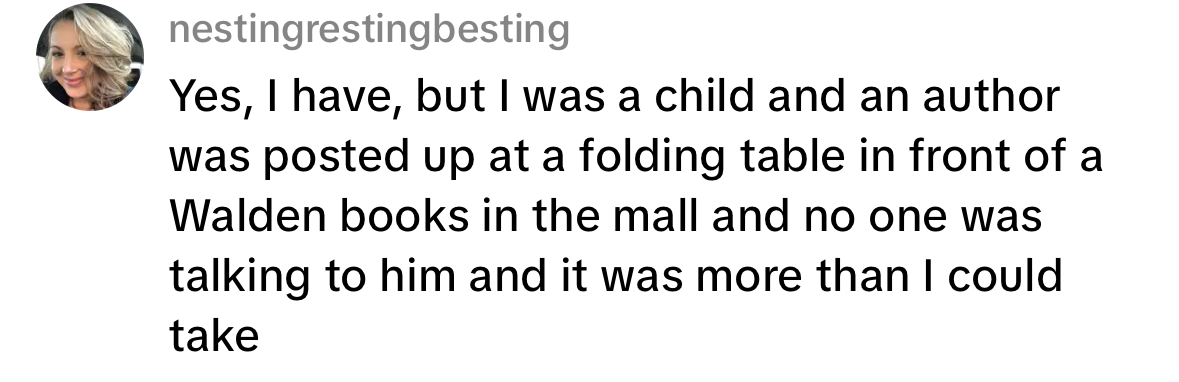
I asked on TikTok if anyone had ever bought a book because they felt sorry for the author.
Sympathy drives engagement on social media—my Instagram algorithm has learned that I want to see every single post about a cat or a dog crossing the rainbow bridge (thanks a lot, Instagram!) because I always leave a comment when a friend loses a beloved pet. I’ve been moved to donate to medical GoFundMes for people I’ve never met.
I buy books because it gives me pleasure to buy books. I buy books when I feel like I’ll be left out (there’s my fear of irrelevance again!) if I don’t read something. I buy books when a friend says, “This one is SO you.” I can think of instances when I bought a book out of social obligation or politeness, but not because I pitied an author on social media.
One way to consider this kind of content (about a vulnerable moment of failure) is to think about it through the lens of memoir: the very best memoirs, the ones that move us to tears, are powerful not because they were drafted in real time, but because they were written (and revised) with the distance of hindsight. A memoir is not a diary. The author has reflected and wrested meaning from the failure. Here’s an example of a post that does this—and, critically, it’s not a post promoting a book. It’s a generous post, meant to inspire others, not self-promote.
Your failure will make a great story—later, when it becomes an anecdote in a speech you’re giving at a luncheon to promote your sixth novel. Before you post vulnerable content, sleep on it and see how you feel in the morning.
For years, the publishing industry has sought writers with “platforms” and looked at follower count when considering acquisition, but my prediction for the next five years is that platform is going to become a baseline qualification, and we’ll be talking more about conversion and sales. I’m already seeing this in marketing meetings: publishers are trying to help authors convert their existing audiences into book buyers.
The follower count is a meaningless stat if you can’t persuade your audience that your book is valuable to them.
Upcoming Events
Speaking of events, I have a lot of them this spring in Chicago and Connecticut!
On April 21st in Darien, CT, I’m talking about being in the same writing group for ten (!) years with Kat Rosenfield and Julia Strayer. Kat’s new thriller, about two women who decide to kill one woman’s husband on the Appalachian trail, comes out on Tuesday and it’s TRULY THRILLING. We’ve written something like seven books together? Register here (free)
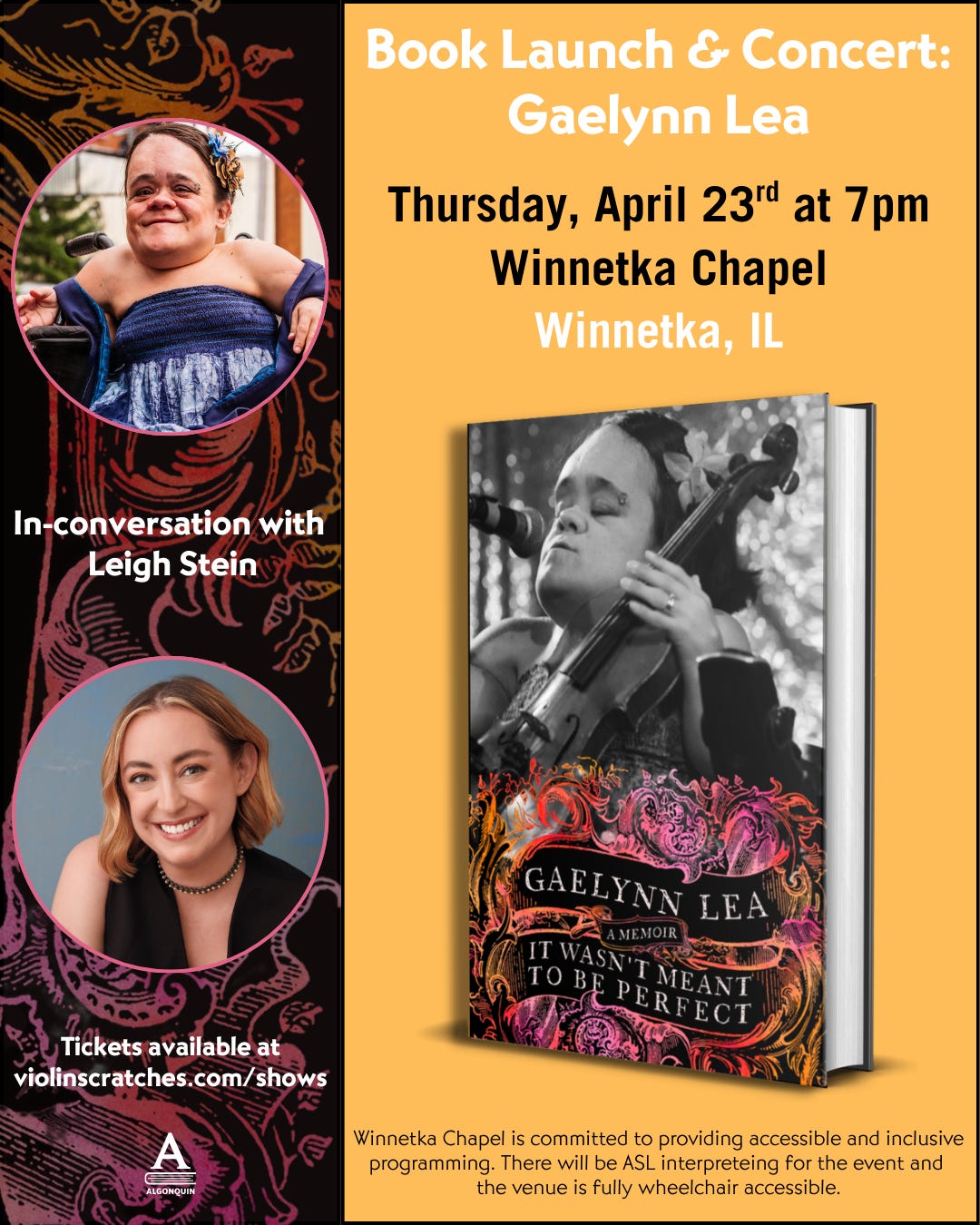
On April 23rd in Winnetka, I’m interviewing musician Gaelynn Lea about her memoir IT WASN’T MEANT TO BE PERFECT. Gaelynn is my book coaching client and we have been working on this book for FIVE YEARS (??!). I know I have North Shore readers of this Substack—I would love to meet you in person and share Gaelynn’s incredible story with you: from winning the Tiny Desk Concert contest in 2016, to going on a world tour, to composing music for Macbeth on Broadway starring Daniel Craig. I will interview Gaelynn for about 30 minutes and then she will play live music. Get your ticket here!
On May 6th in Chicago, I’m interviewing debut novelist Erin Van Der Meer about her media satire THE SCOOP at Madison Street books in the West Loop! Register here
On May 12th in Chicago, I’m interviewing poet and novelist Candice Wuehle about her new Britney Spears-inspired novel ULTRANATURAL at City Lit in Logan Square! RSVP here
Chat Room
I think we've cracked the code: I'm bad at social media and nobody bought my book because I'm too ruggedly handsome and well-adjusted.
Imagine passing a restaurant with a sign in the window that says, “Please come eat here; we didn’t serve even one dinner last night and it made us feel so bad.” Would you even consider stepping foot in the place? Me, neither.