
pleasure studies
Romancing the Stone (1984) and Anora (2024)

In her mid-thirties, Diane Thomas was waitressing at a Mexican cafe on the Pacific Coast Highway, and living in a studio apartment, while she worked on Romancing the Stone. Michael Douglas called the screenplay “the most well-rounded script I’ve ever read,” and said that “unlike so many screenplays by people who have had material rejected, there was a total lack of fear to the writing.” Douglas persuaded the studio head at Columbia to buy it for $250,000 (more than $1 million today). Every writer dreams of such a magical windfall, but Diane’s life ended in tragedy.
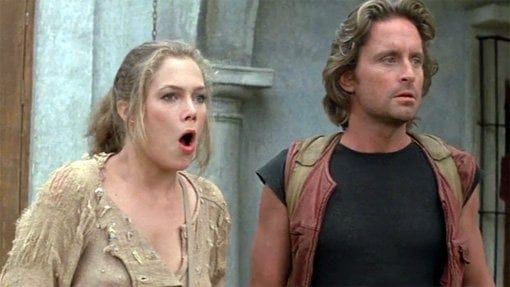
I just watched Romancing the Stone (1984)—about a timid childless cat lady romance novelist1 who has to travel through the Colombian jungle to hand deliver a treasure map to her sister’s kidnappers—for the first time and was struck by what it shares in common with Anora, this year’s Oscar-winner.
Both Romancing the Stone and Anora combine action, comedy, and romance. They combine genres, thereby maximizing the pleasure for the audience.
As Gabriel Miller told The Substack Post:
Anora is a rare film where the protagonist doesn’t know what genre of movie they’re in, and that creates a propulsive drive throughout each movement of the script, which ignites her character change.
In the beginning, she believes she’s in a gritty drama when, in fact, the movie is played like a fairy-tale romance.
In the middle, she believes she’s in that fairy-tale romance when, in fact, the movie has transitioned to a crime thriller.
By the end, when she is emotionally torn to ribbons, she believes she is in a prison drama when, in fact, she is part of a slow-burn romance.
I’d seen The Brutalist in theaters after reading the profile of Brady Corbet in the New Yorker and I walked out of the theater certain it would win Best Picture. It’s a difficult, complicated film, with a masterful performance by Adrien Brody, and a surprisingly swift pace given the run time. When you read about Corbet’s process, and the financial constraints he was working under, it’s even more impressive.
Then I saw Anora on March 1, the night before the Oscars, and the night before my final Plot Curious class, when I was teaching my students about adding more pleasure into their books.
“Anora is going to win,” I thought. “It just has more pleasure.”
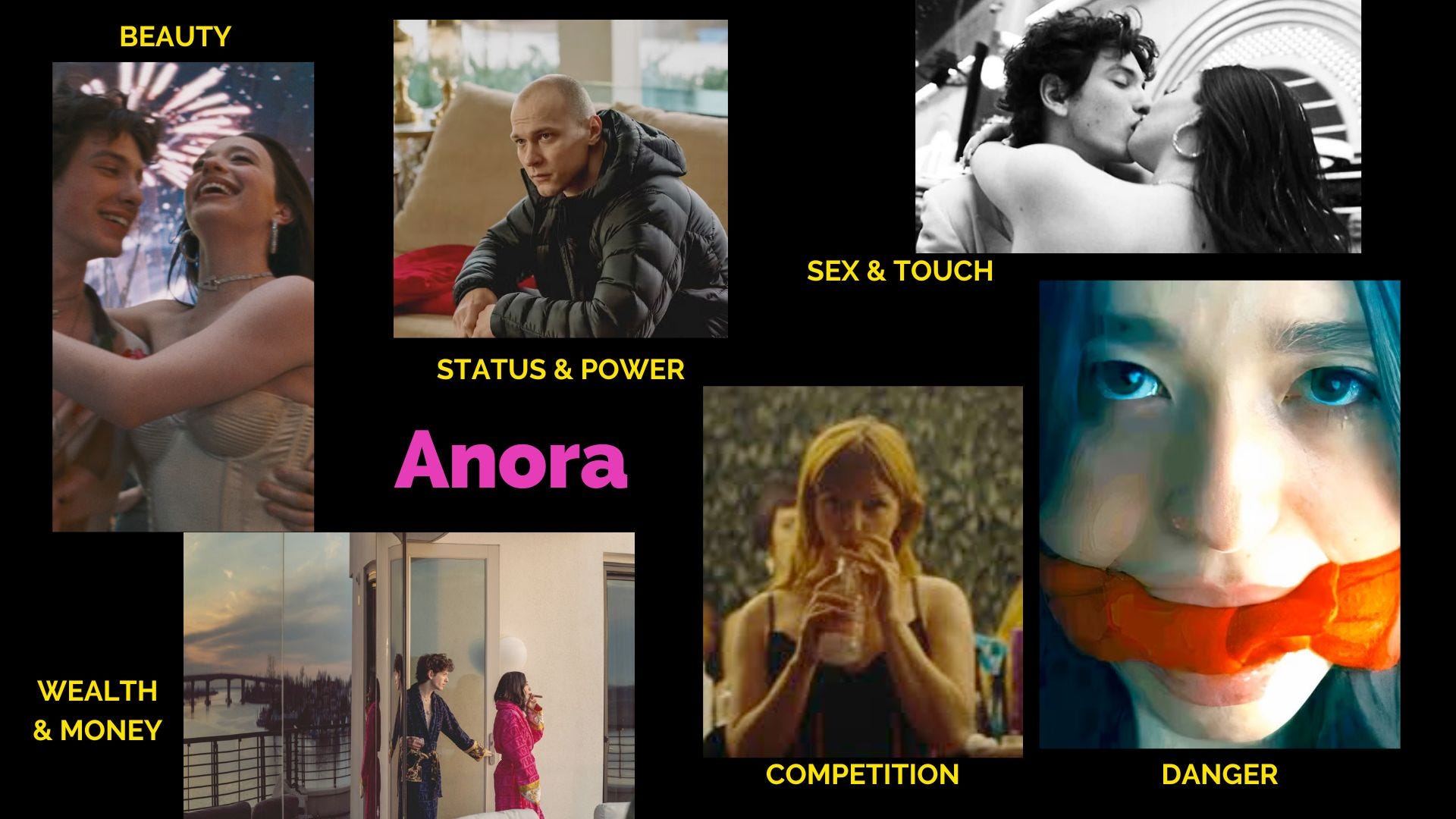
I learned about these six universal pleasure buttons from Dr. Jennifer Lynn Barnes, a novelist and former psychology professor, in a lecture she gave at the Romance Writers of America conference. Unfortunately, the lecture is no longer available online, but you can watch my explainer video on TikTok.
Barnes says that across cultures, and across time, these six buttons hit the pleasure-seeking part of our brains:
Beauty
Money & Wealth
Status & Power
Sex & Touch
Competition
Danger
This is why we watch sports and beauty pageants and Shark Tank and The Bachelor. Think of ancient Romans watching gladiator sports. Think of “Beauty and the Beast.” Think Rebecca. Think Crazy Rich Asians. Think Succession. Think White Lotus. Think WWE. Think Titanic. Think of the makeover scene in Clueless. Think Wicked. Think about how much money the main character in All Fours spends redecorating that hotel room.
Friend of the Substack Libby Waterford also pointed me to this 2024 interview with Barnes on YouTube (I haven’t watched this yet but I trust Libby!)
Barnes argues that bestselling books are packed with the most pleasure. (Think Hunger Games. Think Gone Girl. Think The Wedding People.)
You have probably read, or heard, or thought about readers wanting to escape right now. And maybe that has caused you a tickle of fear or anxiety because you’re hoping to sell a book that is dark, or depressing, or dystopian. Maybe you’re writing about mental illness. Maybe you’re writing a divorce memoir. Maybe you’re writing about a serial killer.
But I think what’s so great about Barnes’s framework is that you don’t have to chase trends and rewrite your divorce memoir as romantasy and change your ex into a dragon—you can actually use the six buttons to inject more pleasure into the book you’re already writing.
Does your memoir already have danger and power? Could you add money or beauty?
Are you writing a literary novel that explores work and class? Could you introduce a competition or a game?
What do readers expect from a book in your genre (literary novel, thriller, romance, parenting memoir, cultural history) and what could you add, as an unexpected bonus?
You can go chapter by chapter in your novel, inventorying each for pleasure.
When I taught this in Collioure last summer, Karen Karbo asked me to read a few pages aloud from my new novel, and I picked a scene that packs in all six. I’m planning to read this same scene at events for my book this fall.
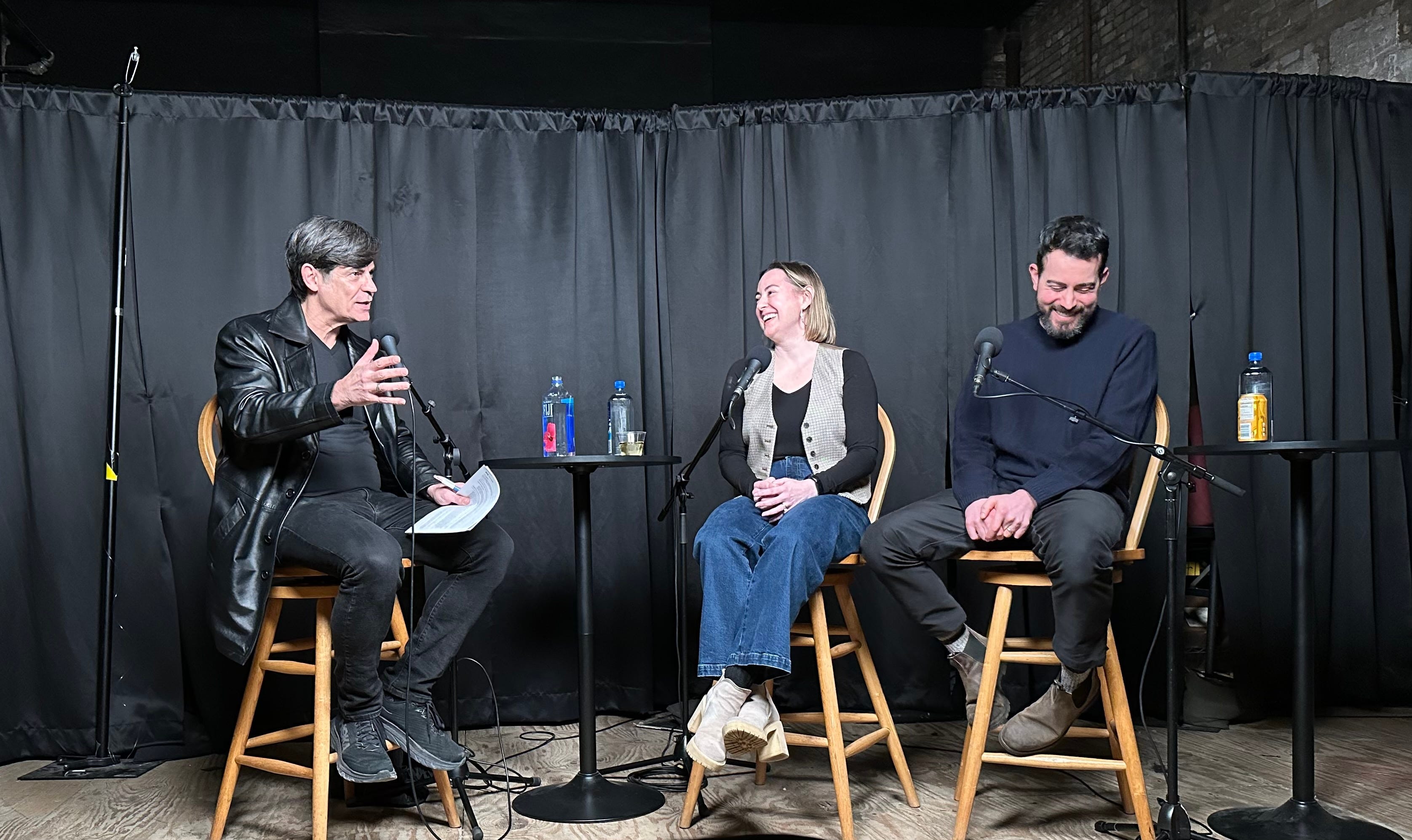
Thank you to Jenovia 🕸️ (who took the picture above!), Tawny Lara, Marcella, Peter, Johanna, Jennifer, and Phoebe for coming to my satire talk on Thursday! The recording will be out later this week.
Upcoming Events
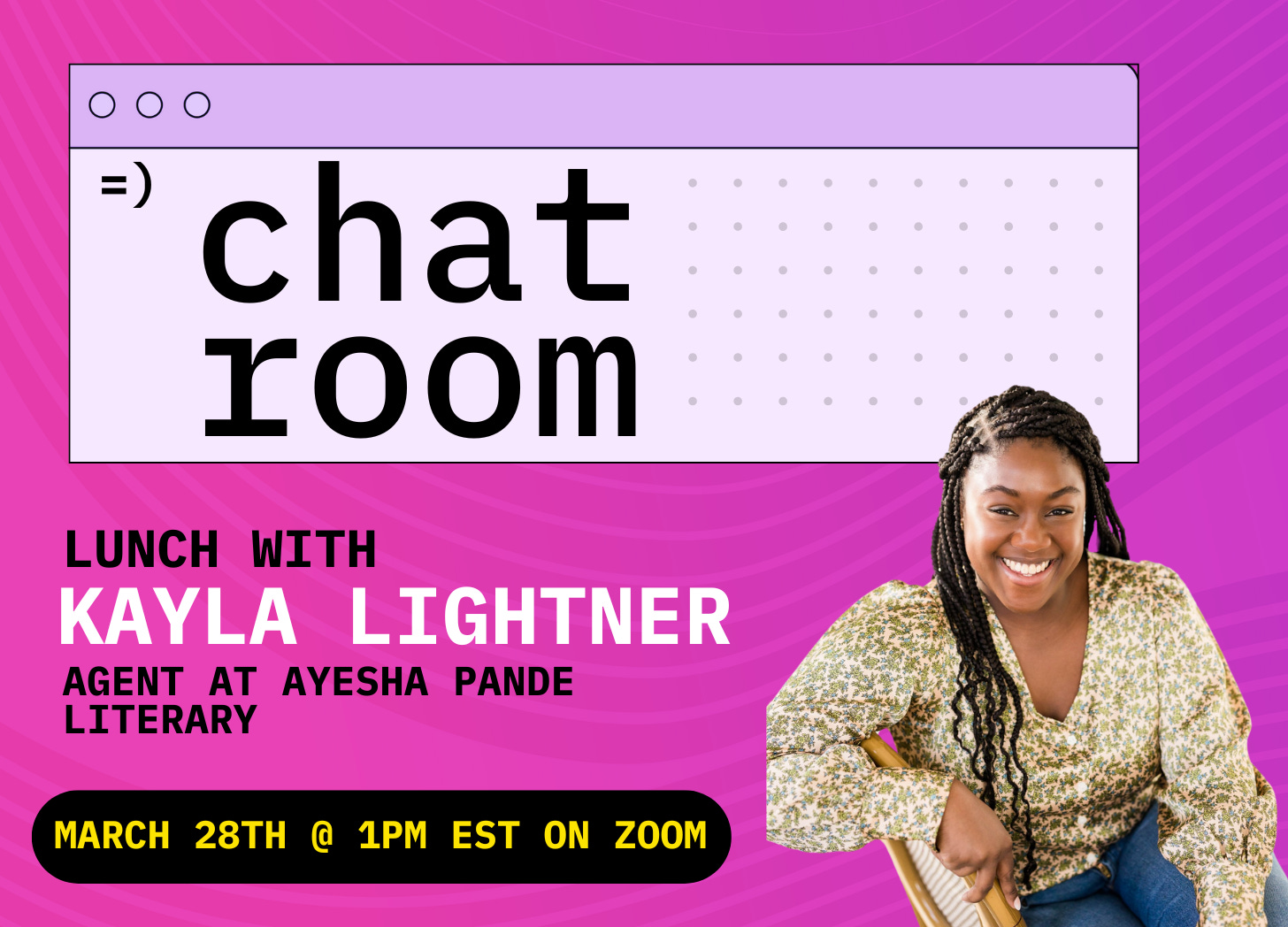
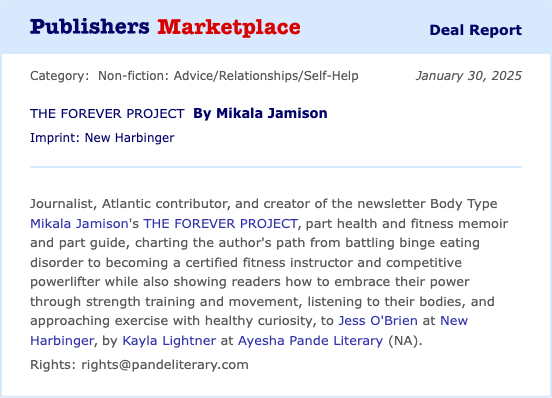
My next Chat Room will be on Friday with Kayla Lightner, an agent at Ayesha Pande Literary, who recently sold Substacker Mikala Jamison’s book. I’ll interview Kayla for 30 minutes and then open it up to your questions. If you can’t join us live, there will be a video recording available to watch for 7 days.
This footnote is for my plot structure students: I love how Kathleen Turner and Michael Douglas’s characters have opposite psychological needs in the movie. By going on an adventure together, Turner’s character becomes more courageous, and Douglas’s character becomes more soft and tender.
PLEASURE! My friends and I were discussing On the Calculation of Volume by Solvej Balle and that’s what it was missing for me. Reading it felt like rug burn.
LOVED Romancing The Stone as a kid, you’ve inspired me to do a re-watch. I remember the sequel, The Jewel of the Nile was also fun.
You guys looked and sounded great up there! We had such a wonderful time! Can’t wait for your fall book events, I’ll be there with bells on💘
Leigh, thank you so much for the insight about pleasure. It's a recurrent theme I've seen come up lately (in craft workshops, etc.), but until now I haven't thought it was entirely relevant to my work. Even though I'm in the querying trenches, this idea could be an interesting one for my straightforward memoir about trauma (I say with a smile and a laugh -- as if we need another one of those). But to your point about the divorce memoir, it seems like pleasure would be a natural counterpoint to painful storytelling. In my story, I think it might have the added benefit of heightening the tension within certain experiences I am trying to render, like dysmorphic thinking, for instance (everyone saying I look the happiest I've ever been while I feel completely destabilized)... I'm a therapist, so this play of pleasure against pain as a narrative device really appeals to me. Thanks for sharing your take on it!