
the year literary publishing learned the power of fandom
Strangers, Yesteryear, Famesick, and Adult Braces

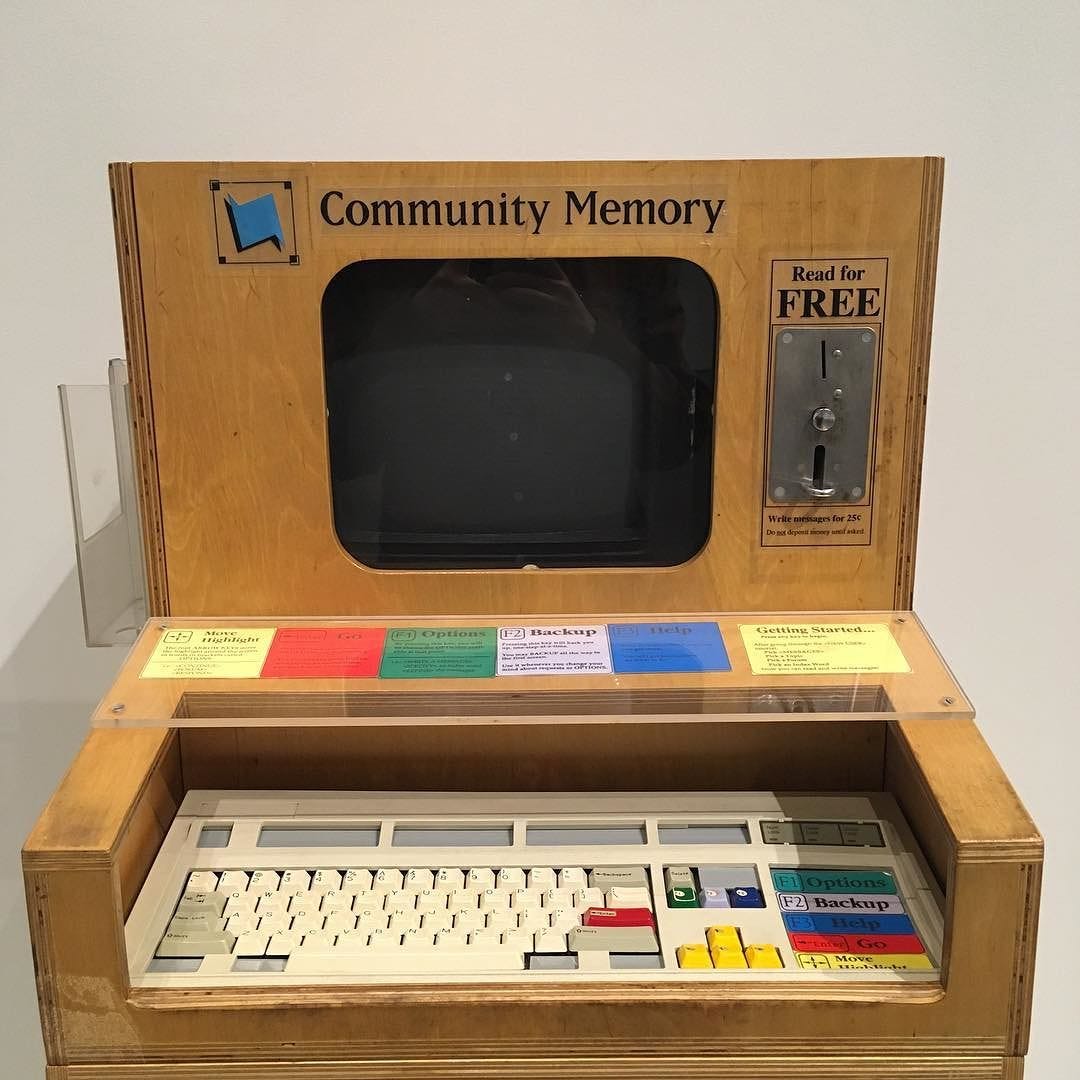
The first public online community was created in Leopold’s Records, in Berkeley, California, in 1973, eleven years before I was born. The project was called Community Memory and it was a digital bulletin board, twenty years before Craigslist, hosted on a computer terminal inside the record store. Additional terminals were installed in laundromats and libraries. Its creators called it “an information flea market,” where users could post messages seeking a drummer for their band or a chess partner, or recommend restaurants or books to read. If you weren’t a scientist or an academic, posting to (or reading) Community Memory was likely your first experience using a computer.
.jpg)
Community Memory, and the hundreds (if not thousands) of dial-up bulletin board systems and email listservs that sprang up over the subsequent decade, attracted a lot of Grateful Dead fans. As much as we should credit programming pioneers for inventing, building, advancing, and improving the digital infrastructure we use today, we should also credit… Deadheads.
Without fandoms, there is no internet, Kaitlyn Tiffany argues in her sharp and ebullient book Everything I Need, I Get from You: “Before most people were using the internet for anything, fans were using it for everything.”
In 1975, an artificial intelligence researcher named Paul Martin figured out a way to distribute his research lab’s email chain on the Grateful Dead in the form of a proto email listserv on ARPANET, so fans could share news about the band.
In an early example of fans transgressing the blurry boundary between the virtual and the real, when several members of Martin’s listserv learned that Dead guitarist Bob Weir had been hired to play a wedding in Palo Alto with his side band Kingfish, they showed up to crash the wedding.1
A decade later, the WELL was the most influential dial-up bulletin board system in the Bay Area. Its first director, Matthew McClure, says that the community grew through word of mouth among computer professionals and journalists. Then it had a second growth spurt: it became a home for Deadheads.
“The Deadheads came online and seemed to know instinctively how to use the system to create a community around themselves,” McClure told Howard Rheingold, author of The Virtual Community.
At that time, Tiffany writes, “individual internet users had to pay à la carte for the hours they spent online, and being a member of the WELL—if you used it fanatically—could run up a bill of hundreds of dollars a month. These funds were necessary to keep the service operational, and the Deadheads were therefore crucial to its survival. According to Rheingold, the Grateful Dead conference on the WELL ‘was so phenomenally successful that for the first several years, Deadheads were by far the single largest source of income for the enterprise.’”2
You can see a list of all the “public conferences” (niche subcommunities) on the WELL here.
Women and girls were unwelcome in these early online communities (“there are no girls on the internet” became a catchphrase), but teen girls were there, building the social architecture of the internet. Tiffany cites Nancy Kaplan and Eva Farrell, who point out in their 1994 ethnography of “young women on the net” that since teen girls had no professional reason to be online (compared to someone like Paul Martin), it was their desires that drew them there. Unlike the men of the WELL, teen girls were writing “to maintain connection rather than to convey information.”3 They built fansites to X-Files and Buffy and Sailor Moon and Hanson on GeoCities. They built a cashless network for trading Tori Amos bootlegs. They engaged in life-changing vampire roleplay.
I was born in 1984. I can remember exactly where I was when I first saw the internet: at the house of friends of my parents, in the bedroom of their daughter. Not only did she have a computer in her bedroom, which impressed me greatly, but her computer had something called “AOL.” She showed me how we could access chat rooms and message boards, and it was like I’d been shown the wardrobe to Narnia.
The first online community I participated in was an AOL message board for fans of Andrew Lloyd Webber, where I met the teenage boy who would save my life.
The second was an email listserv fan club for the YA novelist Francesca Lia Block. Thanks to that community of teen girls, I learned about Sylvia Plath and Anne Sexton, Bikini Kill and Bratmobile, Tori Amos and Ani DiFranco, Claude Cahun and Francesca Woodman. We traded zines and mix tapes by mail.
Can you remember your first internet community?
In the early 2000s, I started posting poetry and short stories to Livejournal, where I met a poet with an MFA who told me that if I stopped self-publishing to the internet, I could submit my work to something I’d never heard of before called “literary journals.” That was the start of my writing career.
By 2014, the year I was invited to join a private Facebook group of women writers, I had been making friends on the internet for more than half my life. I had the idea to organize an in-person conference for the other 30,000 members, put out a call for volunteers, and raised $55,000 on Kickstarter in three months for a 550-person conference in New York City.
Today, I work as a translator, helping authors and book publishing professionals understand internet culture and how the creator economy is transforming legacy media.
What I’ve started to observe in 2026 is how the customs, norms, behavior, and beliefs of fan culture are selling—or sabotaging—books in the more literary corners of publishing, for the first time.
Fandom in commercial fiction
The commercial fiction sector of publishing has already learned how to profit from fandoms. Readers of commercial fiction want more of what reliably hits their pleasure buttons: happily ever afters, danger and thrills, familiar tropes (e.g., second-chance romance; forced proximity), wealth and power, plot twists, fairies and dragons, monsters and ghosts—and sex.
So publishers acquire series (like ACOTAR), and publish sequels and spin-offs. Books get adapted for screen, which converts new fans, who buy more books—at the end of last year, bookstores sold out of Heated Rivalry.
Some fans write and publish fanfic, on websites like Archive of Our Own4 (AO3) and Wattpad, based on their favorite novels, bands, movies, or TV shows. 50 Shades of Grey, which has sold 165 million copies worldwide, began as Twilight fanfic. Lauren Billings and Christina Hobbs, the writing duo behind the pen name “Christina Lauren” met online writing Twilight fanfic.
Fanfic sites have become neon billboards for commercial imprints (and literary agents): look here for your next hit.
As Elizabeth Held has written for Vulture, “Fic writers bring knowledge of how to market a story and build an audience, a boon for editorial houses. The fans authors have gained writing fic will buy books, in some cases carrying them to the best-seller list. For writers who demonstrate a facility for telling a certain kind of story, the process of transitioning into writing traditional books is as much a matter of format and structure as anything else.”
Three traditionally published novels that originated as Harry Potter fanfic hit the bestseller list in 2025. In Defector, Eli Cugini argues that we can see the impact of fanfic even on “prestige” publishing, and cites Kaliane Bradley’s literary sci-fi romance novel The Ministry of Time as an example. Bradley was inspired to write the novel because of a character in the AMC show The Terror.
I can think of other literary fanfics: Bridget Jones’s Diary. Ann Napolitano’s Hello Beautiful. Percival Everett’s James, which won both the National Book Award and the Pulitzer. If You’re Seeing This, It’s Meant for You is my fanfic of Rebecca.
Cugini’s argument that literary novelists could learn a lot from fanfic writers (how to inject more pleasure into your fiction, for instance, which I’ve written about here) is persuasive.
But as a book publishing expert and amateur internet anthropologist, I’m less interested in how fanfic is influencing the craft of writing, and more interested in how the kind of obsessive fan behavior that originated on Grateful Dead listservs, evolved into a Tori Amos bootleg webring in the ‘90s, and transmogrified into 2010s stan Twitter is now impacting sales of literary fiction and memoir.
The memoirist’s fandom
Belle Burden is not—spoiler alert—Harry Styles. She is not Benedict Cumberbatch or Adam Driver. She is not even Taylor Swift! To my knowledge, she’s never danced on TikTok or followed the humiliating advice of people like yours truly to “build a platform” by “creating content” in order to get a book deal for a memoir.
Belle Burden is a wealthy fifty-six-year-old mother of three, who published a Modern Love essay that became the quietly devastating divorce memoir Strangers, a word-of-mouth literary sensation that has sold hundreds of thousands of copies (outselling Lena Dunham’s memoir Famesick) since it was published in January. Gwyneth Paltrow is already slated to play her in a film adaptation for Netflix.
Of all the memoirs by middle-aged white women, why has this one made it?
Strangers elicits a powerful allegiance in the reader: the reader is Team Belle. By publishing the true story of her husband’s betrayal and abandonment of their family, Burden has attracted a fiercely devoted fandom of women, united not only in their adoration of the author, their sympathy for her as a victim, and their respect for her as an advocate for women’s financial empowerment, but also in their utter disdain for her ex-husband, called James in the book.
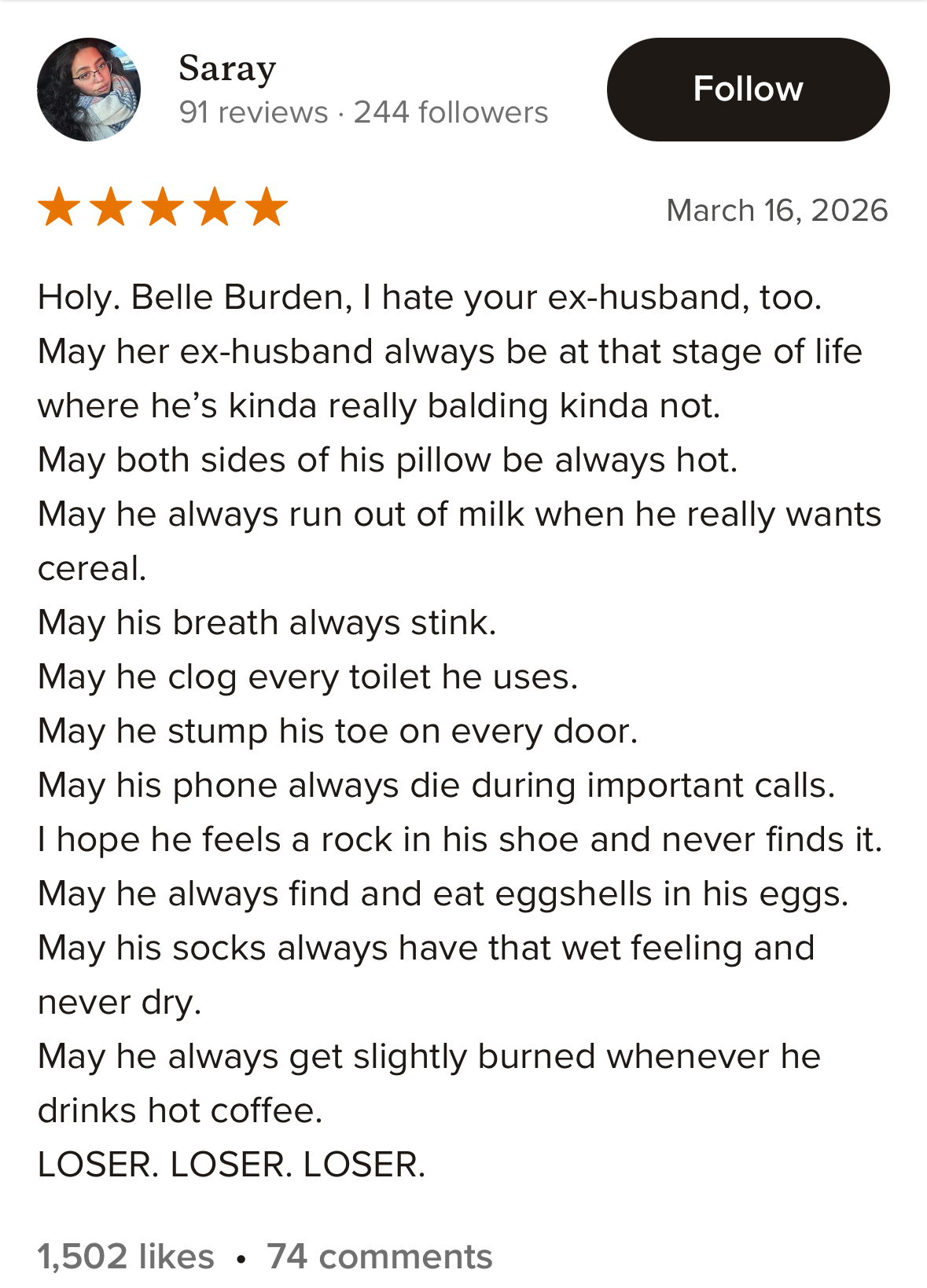
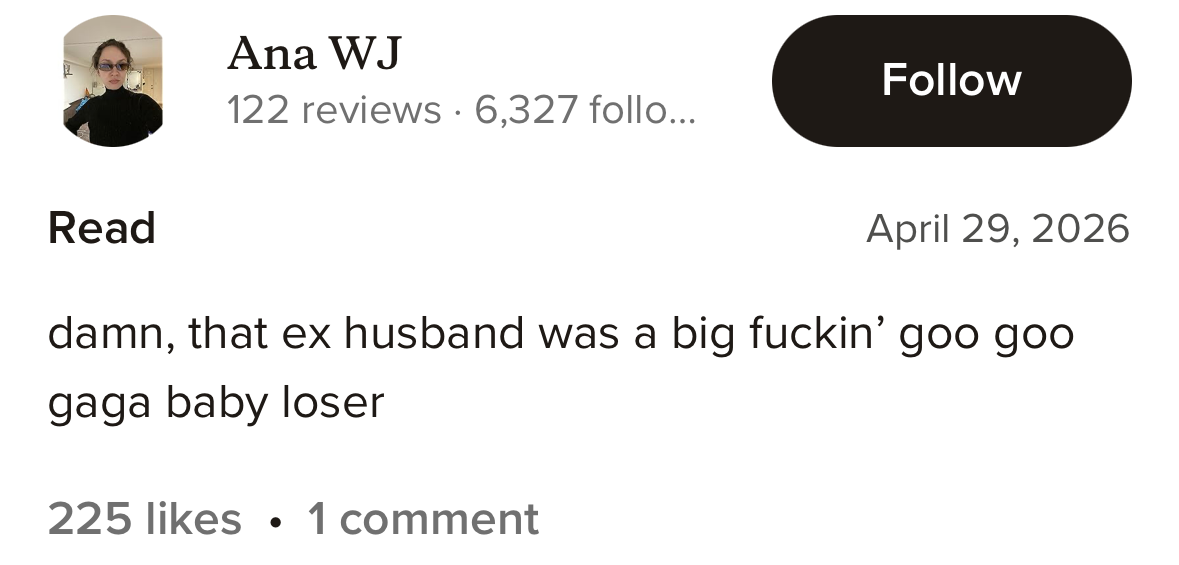
To be Team Belle is to be on the side of wives and mothers. To be Team Belle is to be for women.
If you’re not Team Belle, what are you—a misogynist? (Ding ding ding!)
When the New Yorker published an investigation over Memorial Day weekend, into the financial details that Burden withheld from the reader in a memoir that hinges on big financial stakes, the fandom reacted ferociously, on par with Swifties upset with a critical album review.
One comment on the New Yorker’s Instagram post says, “Such a shameful idea for an article, I cannot believe you guys decided to run it. It also amazes me when women feel the urge to bring - or at least try to bring - other women down. Why is that? Would you have done a similar thing have Strangers been written by a man? I think not.”
(Yes. Yes, they would have. I’m old enough to remember James Frey.)
Another says, “This is an insane piece, this book was so well written. Who cares if it isn’t perfect it’s a memoir and it was a beautiful and heart wrenching read. How about we don’t bash women who try to tell their story?”
My own video about the New Yorker reporting received about 400 negative comments over the course of four days until I decided to turn off comments.
This is bigger than a fandom around a book (like Wild or Educated)–the fans are as loyal to Belle as they would be to their own sister. They will defend her honor. They have a worthy cause to fight for. They feel even more connected to one another by battling their shared enemy (since they can’t fight James on Instagram, they’ll fight the New Yorker and… me). Fandom logic says you’re either Team Belle or against them.
The ballerina’s anti-fandom
The ballerinafarmsnarking subreddit has 5,000 weekly visitors and four rules: Respect child privacy, Be sensitive when posting about animals, Respect others and be civil, and No spam.
The idea of calling for civility and respect in an online community dedicated to gleefully hating another woman is hilarious to me—but I digress.
Snark forums are internet communities where women gather to trash, instead of to gush. It’s the Upside Down of fandom. You may ask yourself, “Why would anyone want to spend hours of their week in a discussion forum for an influencer they can’t stand?” For the same reason they’d join a fan club: the camaraderie.
Many snark forum members started off as fans who then became disappointed by something the influencer did—so they joined the anti-fandom.
Yesteryear, the second-bestselling novel5 in America, has been marketed as a critique of trad wife culture, but everyone who reads it knows it is a critique of Hannah Neeleman, aka Ballerina Farm.
One member of the subreddit commented:
I watched a lot of the author’s content before she deleted all of her early videos…. She was extremely fixated on Ballerina Farm so this book is definitely inspired by her. I tried to read it but I felt that the author was trying too hard to make the main character more of a fundamentalist while also trying to base her off of Ballerina Farm, who is LDS. Mormons and fundamentalists are so different. They are just not compatible.
Another said, “I feel like the author is all but saying ‘we call ourselves ballerina farm’.”
For book publishing, the success of Yesteryear sets precedent. Readers are not only moved to buy books because of shared enthusiasm for Shane and Ilya, Hermione and Draco, or Rey and Kylo Ren. Readers can be moved to buy books because they dedicate some of their leisure time to hating the same woman as their friends.
Turning your fandom
Lindy West already had a fandom when she launched her fifth book, Adult Braces, in March, but, tragically, her fans did not have the reaction she expected to her memoir. I was not the only person who expressed disbelief at her insistence that she was happier, after choosing to be in a throuple with her unfaithful husband. Her husband Aham created a PR crisis for West, by engaging in the comments section of a negative Substack review, and sending a nasty email to a journalist who profiled his wife. Mean-spirited fans (or former fans) dug through social media profiles belonging to Aham and his girlfriend Roya, searching for photos that proved Aham loved Roya more than his wife.
Aham became the enemy of the fandom—like James. But Lindy insisted she wasn’t his victim. She spiraled in public, in her Instagram stories and on Substack, and lashed out at the very same people that she needed… to buy her book. She turned her former fans into haters.
I posted about Adult Braces here on Substack, and on TikTok and Instagram. I think I received a total of three comments from West fans who strongly disagreed with me (one called me mean). Compare that to the hundreds of comments shaming me for tearing down women, when I posted about the New Yorker investigation into Strangers.
In April, it was incredible to watch Lena Dunham, who spent her twenties being excoriated by the media for being young, successful, and not hot enough to be naked on television, play a charm offensive, catch the wave of all the nostalgic Girls rewatching, and turn former haters into fans. Famesick sold 60,000 copies week one.
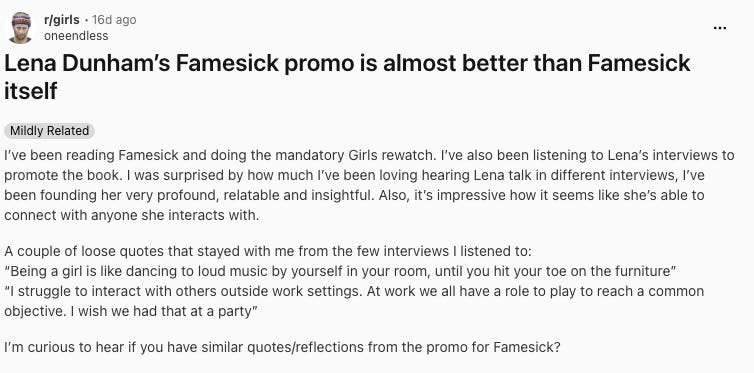
With Famesick, Lena acknowledged the community memory of the last sixteen years, since the release of Tiny Furniture. Then she opened the door and invited us in to Lena Fandom 2.0.
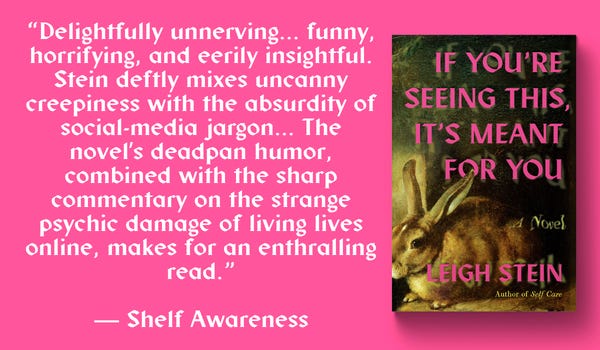
🇬🇧If You’re Seeing This is available in the UK🇬🇧
I’m thrilled to announce that my Gothic mystery If You’re Seeing This, It’s Meant for You is FINALLY available in the UK, New Zealand, and Australia! Inspired by Rebecca, the novel is about a 39-year-old woman who is aging out of working in the media industry. She reluctantly accepts a job from a man she hasn’t seen in twenty years, managing a TikTok hype house out of his crumbling Hollywood mansion. One of the influencers, a tarot card reader, has disappeared from the house.
If you are nostalgic for early internet communities, or fascinated by the dark side of parasocial fandoms, I wrote this one for you.
Frustratingly I cannot find a Waterstones link, but you should be able to order from your local independent bookstore, if you prefer not to shop from Amazon!
Kaitlyn Tiffany, Everything I Need, I Get from You: How Fangirls Created the Internet as We Know It (MCD x FSG Originals, 2022)
Ibid.
Ibid.
Ann Patchett’s Whistler sold 48,237 copies this week, according to Bookscan, and Yesteryear sold 35,270 (to date, Yesteryear has sold 269,635 copies).
What I find fascinating about fandom are the personal stakes that come into play -- how for some of these fans, their own identity and self-regard is tied up in the perception of the book. The New Yorker piece on Burden I thought of as due diligence. Since when did we sign away our ability/right to really look closely and ask clarifying questions? Why can a reader not appreciate the emotional revelations of her story (Burden's in this case) and also question why she chose to cloud the reality of her financial situation to up the stakes? And this lineup doesn't even include The Tell!
I'm writing a novel that takes place in 1996, and was researching the first internet cafes in Berkeley - thank you for sharing these other tidbits about early internet culture! The fandom waves of fanfic also remind me of how the film industry keeps remaking old classics (Possession and American Psycho are slated next..). Easier to get hype for a film that people are already connected to.